REVIEW: Hana Stretton’s ‘tiarn’ is an Intimate Reflection on Memory and Place
WRITTEN BY OSCAR ORTEGA
✮ ⋆ ˚。𖦹 ⋆。°✩
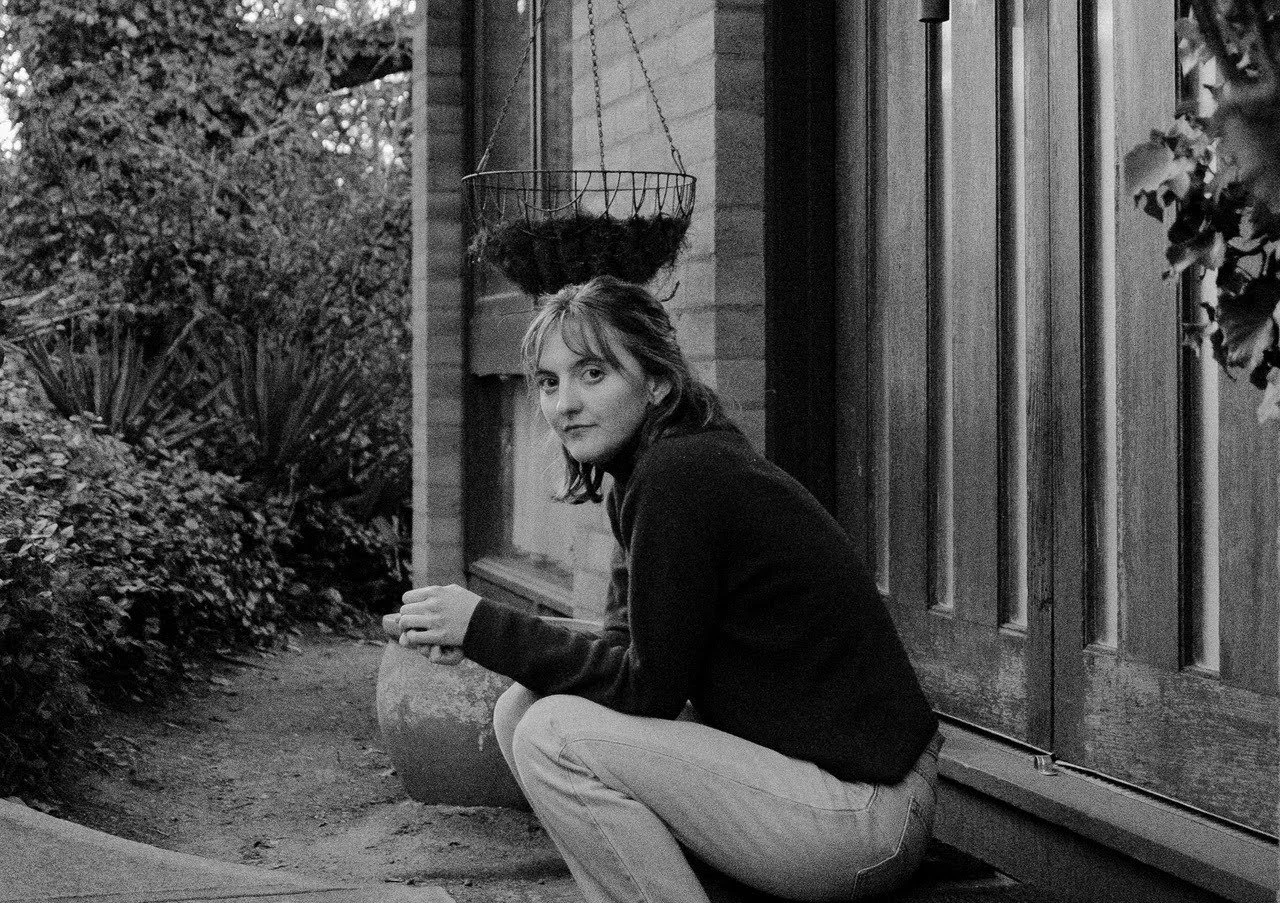
Photo by Zoe Karouzos
During the last two stages of twilight, there is a short transitional period known as the blue hour, where the sun sits significantly below the horizon and the skyline is painted with an almost mystical blue shade. Occurring at both dawn and dusk, the blue hour exists in a transient state of tranquility. During the day, the busyness of the workday has ended, restaurants transition from lunch to dinner, and the streets lower in volume as everyone prepares for their nightly routine. In the morning, the day birds have yet to awake, and the nocturnal animals are already asleep. What results is a period of stillness that reminds us of the natural state of being we so often forget exists.
In a remote beach town in rural Australia, Hana Stretton began a nightly ritual: she regularly swam during the brief blue hour, allowed ideas to flourish amidst the cold waves of the Pacific, walked home alone in the dark, and recorded her ideas late into the night. Through this meditative schedule, Stretton composed pieces that not only documented the vivid soundscapes of her environment but also the feeling of longing and connection that comes from existing within it. On her newest record tiarn, Stretton catalogues a distinct dialogue between the mind and the natural world, a pensive reflection on the state of being in an ever-changing landscape. What emerges is an interconnected world that’s simultaneously singular and vast. Here, her internal world becomes external, and vice versa.
In the three years since 2023’s Soon, Stretton left the rural farm in New South Wales where she constructed her debut. Long are the orchards and cattle she tended in the quiet Australian countryside, the soft rustles of swaying leaves and the vibrant hue of the warm sunlight. Instead, the hushed murmurs of chattering crickets are replaced by the dreamy, atmospheric tranquility of the ocean. The subtle washes of the shore on “Stove” capture the intimate feeling of connecting with the world around us. On “Right Whale,” she sings a choir as seagulls and a lone piano drift off into the horizon. To Stretton, the natural sounds of people are equally important. Rhythmic footsteps serve as the foundation for “Seagull Theory III,” with faint chatter and a chamber of violins painting the serene lucidity of a midnight hangout by the shore.
At its most freeform, tiarn is an archival work that sits between a memory and a revelation. Inspired by archived footage of her family living in Japan in the early ‘90s, Stretton aimed to compose music that reflected the placid and beautiful scenery she was witnessing. Whether it's the jagged rocks of the Japanese mountain range or the calm Australian coastline, there’s always a memory waiting to be uncovered. The sparse field recordings of opener “Nojiri 1993” are akin to a stream of unfiltered thoughts that remind us that our world is fully lived in. She, too, is a part of that world, her echoing breaths on “Forest to the Sea” braid between the coastal white noise of waves fanning across the shore. The muted hums and angelic strings from “Off Strokes” and “Night Swimming” channel the feeling of inner peace with such vividness that it’s hard not to imagine yourself walking alongside the icy coastline at night, isolated yet comforted by the vast ocean around you.
Hana Stretton presents tiarn with an expressive clarity that’s more easily felt than it is explained. It’s difficult to communicate the beauty of the world without the first-hand experience needed to understand it. Yet she tries: ‘Stay involved/Ease in the water,’ she sings on “Stay Involved” with a choral backing so serene it perfectly captures her entire world in sound, teeming with life and purpose. ‘Is that all you want?/All this, always, in our world, changing,’ she discreetly sings on “Salt” as though not wanting to disturb the seagulls just out of reach. Yet it’s the delicate stroke of a piano key on closer “From” where Stretton makes her most potent statement: ‘Love is frozen in the ice/Listen, as it melts into my hand.’ The wind, the sea, and the moonlight that casts a road onto the sea that leads to the horizon possess an intimate power that lies dormant; it’s up to us to discover it.
tiarn does not exist as a composition but rather as a series of auditory vignettes that have been unearthed. Scoured from the ruminations of dozens of misty late-night adventures, Stretton captures the thick sounds of the outside and creates a luscious soundscape that invites the mind to wander. With its opaque storytelling and loose structure, tiarn suggests rather than tells, as if indirectly instructing us to go out and explore our environments; Who knows what you’ll uncover.