Q&A: NATALIE HINKEY’S ‘OSLO, 4TH OF APRIL’ MAKES ART OUT OF SOLITUDE
WRITTEN BY DEL HENDRICK
✮ ⋆ ˚。𖦹 ⋆。°✩
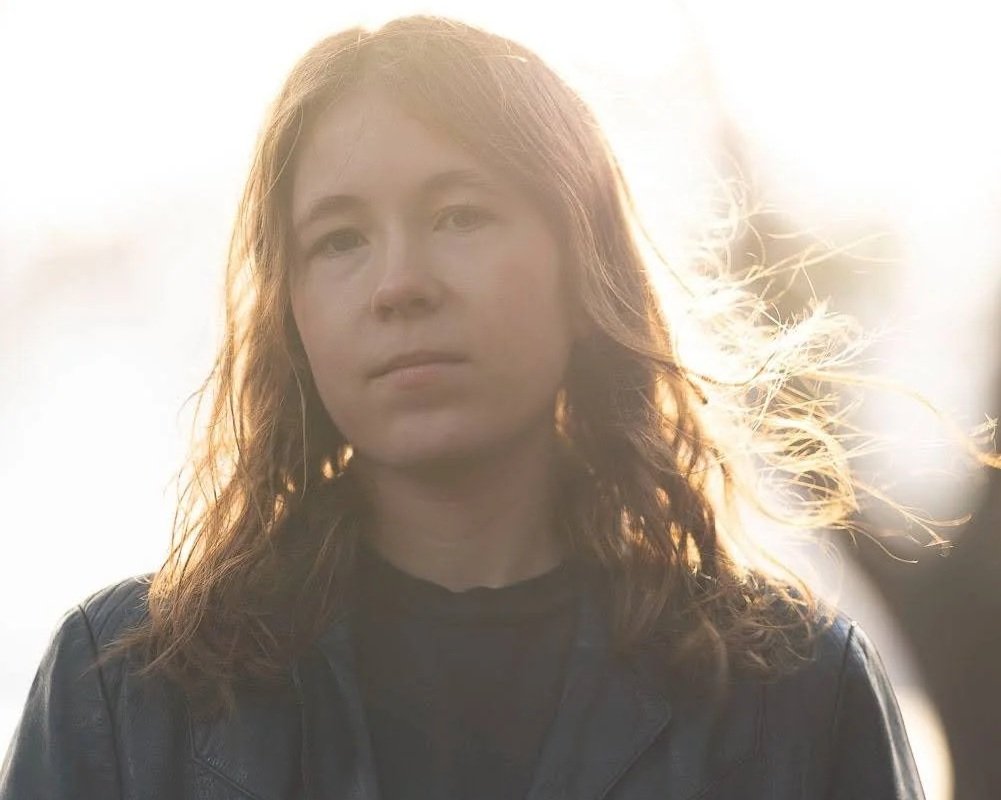
Born and raised in Seattle, Natalie Hinkey started making music after returning from living in Norway for nine months. Her debut album, ‘Oslo, 4th of April’, details an “unforgivingly cold winter” spent alone. Complimented by beautiful guitar sequences and a uniquely soft voice, every song in this album is composed of brutally honest and vividly descriptive lyrics.
“Løren,” the first song on the album, opens with the lyrics ‘you wanna live where I learned to die, no one ruins places like I do,’ establishing themes accessible to a wide variety of listeners such as insecurity, imposter syndrome, doubt and a general sense of woe. Above all, though, Hinkey’s music is undoubtedly alluring. She invites listeners with her sound and entices them further with hard-hitting words like those in “Just Different” ‘I want everything so bad, I’d be better off if I never wanted anything again.’
Hinkey’s lyricism is startlingly vulnerable as well as poetic. Her songs are owed more than one listen to properly capture her voice and her writing. You will not regret spending time with this album to appreciate the soul it captures, the glimpses it offers of a life lived in Norway down to all the personal connotations attributed to ordinarily everyday objects like the subway, orange juice, and rabbits. Language is bent in a way that’s nearly playful if not for the serious demeanor of the album — instead, it comes off as inventive the way Natalie Hinkey speaks in moments such as in “Dead July,” with the line ‘the hem of my brain is stuck on the doorframe.’
Her gorgeous and devastating sentiments come wrapped in rhythmic chords reminiscent of late lonely nights and a cold chill in the air. Life on Jupiter is thrilled to sit down with Natalie Hinkey and ask her further questions about the album.
✮ ⋆ ˚。𖦹 ⋆。°✩✮ ⋆ ˚。𖦹 ⋆。°✩✮ ⋆ ˚。𖦹 ⋆。°✩
LIFE ON JUPITER: Thank you for sharing your music with us, Natalie! This album was a superb listen. Because I think it’ll provide a more in-depth view for listeners and readers alike, I’d love to hear more about you. About your time spent in Norway. Why did you go? What inspired you while you were there— places, people, memories? How did it differ from your home in Seattle?
NATALIE HINKEY: When I’m asked about my time spent in Norway, I always answer the same. I talk about the beauty of the forest north of Oslo, where I would run, and how the snow was breathtaking when it fell and covered the whole city. I was there for an exchange year at the University of Oslo during my sophomore year, arriving just after my 19th birthday in August 2022, and returning home to Seattle in June of the following year. I was a college student in the middle of a biological anthropology degree at the University of Washington, and I thought that a year in Oslo would be an adventure away from the city I had lived in my entire life. I needed a break from the experience I had my freshman year, where to everybody else I was fine because I was working a job, getting good grades and running, but in reality I was miserable. Unfortunately, everything that I struggled with at home in Seattle came with me to Oslo where I was utterly alone.
By the time my second semester in Oslo arrived, I became increasingly aware of the fact that I was not okay but I didn’t know what to do about it. I’ve always struggled to tell the truth when it comes to my mental health, and my parents were spending a lot of money for me to be abroad, so I said nothing. I stopped running, stopped attending class, stopped eating and lay in bed most days. My family came and visited me in March of that year, and I pretended that everything was fine. But by the time April came, I felt that my time was up. I needed to call my parents and tell them something was wrong. I couldn’t join in on the family call every Sunday and lie about what I was doing. That's where Oslo, 4th of April started: that moment where I finally admitted to myself that I couldn’t fix myself. I had prided myself on being good all the time, keeping a perfect schedule, eating the right amount at the right time, running a set amount of miles. I thought that this could keep me together forever but I was wrong. Oslo broke me open, and when I looked inside, I realized that I was completely empty. It has taken me a long time to grow a real me inside that emptiness, and Oslo, 4th of April, was the project that kept me on this Earth long enough to see what that real me looked like.
What does Oslo on the 4th of April mean to you, if you’re comfortable sharing?
HINKEY: Oslo, 4th of April was a reason for me to stay alive, but at the same time functioned as a reason for me to despair. I picked up music as a hobby because it had been one of the things that had gotten me through my time in Norway. I spent many nights looking out my window at the falling snow, listening to songs where I felt like the artist really understood how I felt. I couldn’t explain to anyone around me how depressed I felt and so music became that way for me to tell the truth. The problem with this was that I was so miserable that I was convinced I would never make anything good, and that the album I so desperately wanted to make was never going to happen. I put a lot of weight on music and creation, and in hindsight, I wish I had not seen it as the only way for me to get better. I had heard other musicians speak about how music had saved their lives, and I wanted that for me to. I’m still trying to figure out what place music should hold in my life and creating this album made me realize I was looking for a savior in all the wrong places. I got the title of the album from a film called Oslo, 31st of August by Joachim Trier. It was a film I watched at the University of Oslo in March of 2023 that really struck me because of how I related to the main character. I changed the date to the day that I called my parents and asked for help, in a more hopeful reference to my time in the city.
Is there a purpose behind the order of songs in the album and do you have a personal favorite?
HINKEY: When constructing the album, I knew that “Løren” was going to be the first song, but I didn’t have a clear vision for how the rest of the songs would be ordered. “Løren” happened to be the first song that I wrote, and was the only one that took place in Oslo, so naturally it felt like the opener. I had it in my head that I wanted nine songs on the album, and one of my favorite albums, Sprained Ankle by Julien Baker, also has nine songs, so I kind of organized it in the same way. When I listen to that album, for me it's broken into three sets of three songs, and I feel like I also had the same groupings within my own nine songs. I thought about what songs on Sprained Ankle my own songs would correspond to, and used that to place them where I thought they’d fit best. I debated for a long time whether or not this was actually a good idea because I didn’t want to copy her, but by that point I had already been thinking about the album in that specific order for so long that it felt too wrong to change it.
The song that I love the most is “Bay 55” for the person it’s written about, and for the coincidences that occurred after the song was finished. It is about a conversation I had with a friend where I told her how it felt like I was never going to be happy again, and that I was going to be broken forever. She has a way of lovingly coaxing the truth out of me in a way that I have never experienced before, and even though I often feel like I could never burden someone by telling them how I feel, that is not the case with her. That night in bed after talking, I lay awake for hours ruminating on everything that I had told her, becoming increasingly more convinced that I was a liar and a horrible person for telling her that. I felt so awful that I wished I had never spoken, and the next day, on a break at work, I wrote most of the song. Months and months later, I was having a different conversation with this same friend and I told her about how I didn’t like talking sometimes because then I would question whether or not I had told the truth. She then used the same phrase I had written in the song and said that she called that “chewing it over,” which immediately made me love the song.
As for the process of creation, what came first for you, the instrumentals or the lyrics? What did it look like assembling this album? Do you have a routine for producing music/writing or do you tend to follow the desire to create when it comes?
HINKEY: All of my songs came with the lyrics first, and then afterwards I made guitar parts for them. I took a notebook with me every day to school and work, and this is where most of the writing happened. In every lecture, my junior and senior year of college, I had my notebook out, writing songs because that was the only thing I really cared about. At work, I would let my mind wander while walking around, and I was constantly writing down little phrases in my notes app. It was at home when I played guitar that I came up with little riffs or guitar parts that I liked, and then I tried them out with lyrics that I had already written. It was very much a process of just trying things out on guitar, using different tunings and then seeing if I came up with something I thought was cool. Until the very end of the process, where I just needed a final song, there were no strict sessions of sitting down and writing about a particular moment; I was all much more freeform.
It’s clear in your work that you’re driven by imagery and sensory details. For example, in “Sound Waves,” the line ‘I was claws on the screen door,’ or in “Bay 55,” when you say ‘your words were soft but I chew them over all night.’ I’m very curious as to what media inspires you and what made you the person/artist you are today— are you a big reader or film watcher? Do you have favorite musicians?
HINKEY: I would say I’m not a consistent reader or film watcher. I will get into reading spurts where I buy books and read them all in a row only to not read again for months. The same goes for TV shows and films. I will watch a TV series every now and then, but I am a huge sports fan and would rather spend my free time in the evenings watching baseball or football. Music is really the art that I spend the most time interacting with. Some of my favorite artists are Julien Baker, Gregory Alan Isakov, Frightened Rabbit, Big Thief and Lucy Dacus. I am very much an album listener, not a playlist maker, so I enjoy artists who make cohesive albums that I can listen to all the way through. What usually determines whether or not I like an album is the lyricism, not necessarily the other components like the instruments or rhythm.
Some of the moments in these songs are intensely sorrowful. You manage to capture that with so much lucidity that it feels like we are enduring right there with you. Do you view Oslo, 4th of April as a light in the dark or a companion for those going through similar periods of isolation or hard times?
HINKEY: For me, Oslo, 4th of April was always meant to be something that other people who were struggling could listen to when they felt alone. The albums that I choose to listen to when I’m in a bad place are almost always albums that I think match how I feel. For example, when I was in Oslo I listened to “Little Oblivions” by Julien Baker on repeat because I felt like I was ruining my life and that was the album that kind of encapsulated how I felt. I think in the future I would be open to making something more hopeful, but for this album it didn’t feel truthful to give it a happy ending. I don’t want to promise with certainty that things will get better for whoever may be listening to my music, because I know from experience that it takes time and that it hurts to keep believing in a future that might not happen.
In “Choking,” you give us the lyrics ‘It’d kill you if you knew what I envision. Grad school and a house on the East Coast.’ Has music been a departure for you in terms of what you envisioned for the future?
HINKEY: Music came into my life at a time when everything was uncertain to me and I had no clear view of my future at all. It hasn’t necessarily given me a straight path forward, but it has made me okay with not knowing what I’m going to do next. I had this idea that becoming a musician was the only thing that could save me, and now that’s not the case. I’ve been taking a break from music for the last couple of months, and only now as I’m writing this have I started thinking about creating again. I have a job now that I enjoy that allows me to work on music on the side and right now that’s what makes the most sense for me. High school me would’ve assumed I’d have a more prestigious job by now, but I think I’m finally at peace with how things have turned out. I have a couple of songs written for my next album and I finally feel ready to start working on it seriously now. I have no deadlines set for myself as to when it needs to be finished, and fewer rules for what it has to mean than last time. I’ve found the spot where music lies in my life; it’s not medication, it’s not a saving grace, it’s a friend, it’s a way to learn how to tell the truth.