Q&A: Autumn Fowler Reflects on Her Debut EP ‘Overgrown’
WRITTEN BY OSCAR ORTEGA
✮ ⋆ ˚。𖦹 ⋆。°✩
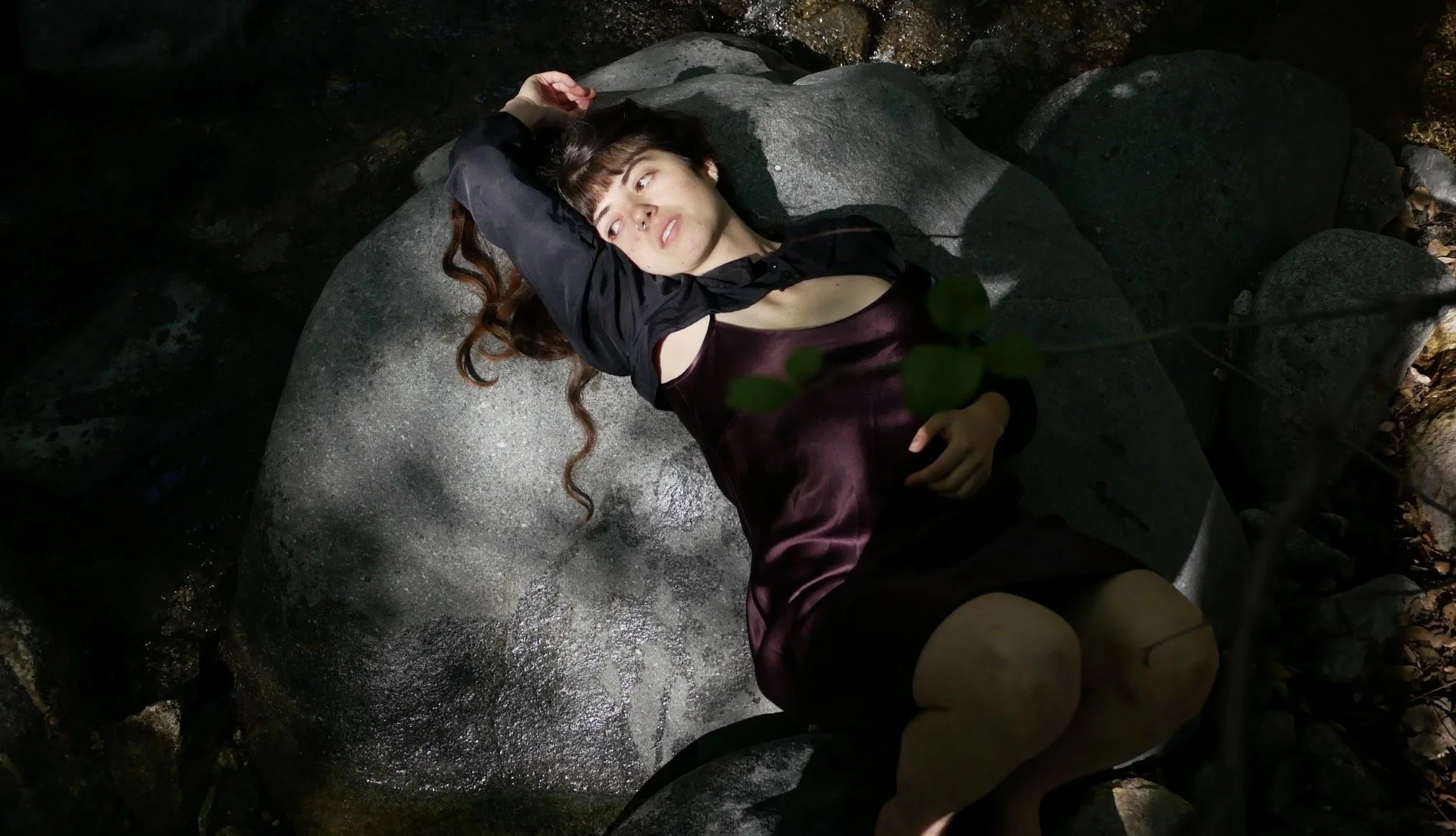
Photo by Mackenzie Dobias
Autumn Fowler chooses her words very carefully. She leaves gaps in our conversation to collect her thoughts, letting us sit in the silence that exists between us. Moments of similar stillness are scattered throughout her debut EP Overgrown, released earlier this year. “Soft Sounds” is a warm ballad, tethered by sparse percussion and a glittering piano that perfectly captures a faded memory coming in-and-out of focus. “Glacier Song” sees Fowler’s serene vocals float through a tranquil combination of arpeggiated guitars, light synths and the mundane sounds of water flowing along the current. To some extent, this is at the crux of Fowler’s personal universe.
One look at her online presence and you’ll find photos of hiking trails, forests and the luscious greenery of the various environments she surrounds herself with. “Growing up in Northern California, I felt a lot more directly connected to the natural world,” she told Life on Jupiter. “Then I moved to LA to go to school and have been living there for the past few years and I feel like some of the songs I’ve written in LA have a little bit more of this darker, apocalyptic vibe.” It’s through this change in atmosphere that Fowler’s songwriting emerges in full, embracing a strong resistance to environmental despondency that lays the foundation for Overgrown.
What makes Overgrown a succinct exploration of change is Fowler’s ability to weave two worlds into one: the physical world around her and the internal world in her head she often finds trouble escaping. Lyrics about her own anxiety and isolation could very easily be redirected to reflect the sentiment surrounding climate change. “I want to be conscious of what my songs mean or how they impact people, and I have that kind of message of hope or like potential for change, even when I’m talking about things that are heavier like climate change.” Overgrown exists in spite of it all, becoming a pensive meditation on the past, present, and the unknown future that lies ahead.
✮ ⋆ ˚。𖦹 ⋆。°✩✮ ⋆ ˚。𖦹 ⋆。°✩✮ ⋆ ˚。𖦹 ⋆。°✩
LIFE ON JUPITER: How are you feeling now that the EP is out?
AUTUMN FOWLER: I’m feeling good. It was definitely a slow, deliberate process. For a while, I was putting pressure on myself to release something. I released my first single in August of this past year and I feel like I was kind of hard on myself, that it was taking so long or that I was being indecisive or something. But I’m really glad I took the time and made something that felt accurate to me artistically, in a way that if I had done it earlier I feel like I was still figuring out elements of my sound.
I’ve read that most of the songs transpired during specific emotional points in your life. What was that process like for you?
FOWLER: It’s interesting the way that my experiences were captured throughout the writing and recording process. It wasn’t necessarily that I sat down and decided ‘I’m gonna write about these experiences that I’m having,’ but it ended up kind of being this archival experience.
Writing in general tends to be that way for me. But it’s interesting, especially because there was a big gap between when I wrote the songs, when I recorded the songs, when they were finally mixed, mastered, and released. It definitely feels specific to that period of time when I wrote them.
It’s super fascinating to hear that because you kind of go through things in the moment, and then you process it one way but then months, even years down the line, it’s like a completely different perspective. Was that something you kind of experienced looking back on it?
FOWLER: I definitely was having a lot more social anxiety and was very stuck in my internal world around the time I was writing. There’s this closed mindedness in some aspects, or this more fearful approach to connection, especially in some of the songs that I wrote.
Like “Soft Sounds.” That song is very anxious and very reminiscent of an older version of me. And at the time I didn’t even realize how my overthinking or anxiety about things was creating a small world for myself. It’s really interesting now because I feel like I’m not experiencing that kind of daily social stress and anxiety, and so the song feels a little more sweet to me, or a little more nice and kind of funny to be that scared. But there are also certain things that still stay true to my current experiences.
Now that you’re on the other side of that emotional journey, what kind of perspective does that give you?
FOWLER: It’s given me a lot of trust in myself and empathy for past versions of myself that maybe were more afraid or more doubting. I think even the whole process of recording and producing, past baseline composition stuff, was such a period of growth for me. Having the whole project done now and looking back was definitely really transformative.
Would you say it’s important to capture the moment of what you’re feeling? And if so, how does that change your creative approach?
FOWLER: I like writing about things that are happening more in my immediate life. I don't do a lot of writing looking back on the past a bunch. But I feel like it's less ‘I'm gonna sit down and document exactly how I'm feeling right now’ and it’s more like there’s something that’s bothering me, or some kind of question that I wanna answer, something that I’ve been thinking about a lot. And in the process of writing about that, whether I’m writing about climate change or writing about a particular friendship or social relationship of mine that’s confusing, it ends up reflecting things about my current moment but I don’t necessarily set out to document the current moment when I start a song.
You spoke in your email how you like to bridge a bunch of different ideas, especially climate change, nostalgia, and your own identity. How did you land in that intersection and where do you think it's reflected in the music?
FOWLER: I feel like it was a pretty natural place for me to go. I have been really interested in or really connected to the natural world. I grew up going to the Redwood forest a lot, and nature is a place where I do a lot of my initial lyric writing. When I’m outside, I do a lot of free writes and things like that. I’m actually sitting down with my guitar to write the songs, but I think that I’ve always had this interest in climate change and this desire to bring attention to those kinds of issues. I think other aspects of my identity just kind of weave their way in naturally, especially when I’m writing about social experiences that I’m having.
But the climate themes are really present throughout the EP, especially in “Glacier Song.” It started out as an exercise of writing from the perspective of a glacier melting, and then I turned it into a metaphor about friendships fading. And what I ended up with was something that explored human relationships to the environment and kind of asked “How do we heal that relationship?” It was a pretty natural evolution of themes that I’m thinking about, or parts of my identity that have been true for a long time.
With your EP, I can’t help but feel like the title itself is reflective of your artistic journey. I caught up on your substack and I was reading some of what you were saying about it, and I really wanted to ask more about that. Now that it’s out, do you feel like you’re listening to the words of a different person?
FOWLER: It’s been interesting. I especially was starting to get really insecure about it right before the release. I’ve spent so long with these songs, some of them were 4 or 5 years old by the time I was getting ready to record them. It’s tricky sometimes because the process is so long. If you really have outgrown something to the point where it’s not reflective of you as an artist anymore, maybe it’s not something you want to be putting out. I was intentional about it, even though there are things about the songs that I would do differently now, or certain experiences that I was in that got captured in the writing; I don’t necessarily resonate with it in this current moment anymore.
I still think that they are worthwhile and sometimes I can connect with them in different ways than I did when I wrote them. Something about the process of writing was cathartic in that moment and now, they’ve shifted a little bit, but I don’t think they are less meaningful just because I’m further out from the original inspiration or feelings.
How or when does the vision of your own work become visible?
FOWLER: When I start writing a song, it’s pretty tied to imagery or place. I love to write in nature, like I’ll be at this river that I love in Northern California or in the forest and do some free writing. But once I’ve got a couple lines going, I usually get a loose meaning or question that I’m trying to unpack or answer in the song.
I try to center myself around that as I’m writing the next verse or bridge. I don’t ever sit down and be like ‘I’m gonna write a song about how I don’t like this’ or about having a crush on this person or wherever. There is definitely a kind of thread of intention from the start.
At the same time I think there are songs where new themes or layers of meanings were really only clear to me after a year or two after writing it. I think “Glacier Song,” or all of the songs in some regard. Even when I’m trying to make videos about it, or when I wrote the substack about it, the act of sitting down and analyzing it brings to light new meaning, so I think there’s some element that’s there from the start. But also, there’s something about the vantage point of being able to look back and reflect on it that contextualizes it more.
That’s such a great way to look at it. Would you consider it more like a stream of consciousness approach to songwriting or is it something else entirely different?
FOWLER: It depends. I definitely start out with this kind of associative stream of consciousness approach. I really like seeing where my subconscious brain will draw parallels or quickly connect things that if I were really trying to think hard about it, maybe wouldn’t get there as fast or wouldn’t get there at all. I don’t fully surrender it to just being whatever. In the first drafts, it’s pretty abstract or pretty associative. I like to sit down and literally just rhyme and say lines and I’ll have some 10-minute voice memo of me just like saying all sorts of things and then [I’ll] listen back to it and pull lines that were kind of interesting next to each other.
Is that why you describe your work as archival? How you’re pulling from different points of what you’re making?
FOWLER: I think the archival description comes more from the fact that I can look back on a song and be like “I wrote that, and this was happening in my personal life, and this is how I was feeling.” And that definitely is captured in the song. I think that’s where the archival aspect comes in more. But I guess in some sense, that’s also tied into the association.
One thing that I really liked about the EP was its low intensity, or the subdued nature that a lot of the tracks embody. They take up a lot of space without being very loud or being very heavy and I wanted to ask, how did you land in this space? What influences did you have that sort of led you to this path, or was it something that just kind of naturally happened?
FOWLER: Part of it was that most of the writing I was doing was by myself with just my acoustic guitar. I used to do a lot of writing at night, and so I think that also created this need to be quieter. That had an effect on the emotional tone of the song. All of the songs started out with recordings of me and guitar stuff that I did at home. I also had my friends who are jazz players, they were the ones who played the other instruments on the project. Having a jazz drummer lent itself to that more minimal or textural sound rather than having someone who is gonna be playing really hard. I think my jazz experience or training led myself to that sound a little more.
But also, I really love folk music and indie singer-songwriter people like Sufjan Stevens, Bon Iver, Adrienne Lenker, and those kinds of subdued sounds.
Now that your EP is out, where are you headed next?
FOWLER: I’ve been really trying to wrap up these other singles I’ve been working on. I’m really trying to step into my role as a producer a little more. Get more comfortable and independent working in Logic and doing more of the editing and construction of the songs as a whole. I think that producer element is definitely something I’m trying to build.
Right now, I just got a field recorder, a Tascam, so I'm really excited. I’m gonna be doing some immersive field recording projects where the plan is to go out into different places I love. I’m gonna be spending some time up in the Santa Cruz area, visiting family and stuff. While I’m there, I’m gonna go out and do some field recordings where I try to write a song and then record it with the field recorder right in the same spot where I wrote the song and capture the way that the nature sounds.
I’m excited to see how that process of recording so close to the writing process will go. I”ve only really done writing and then months later, going into the studio or doing it at home. Doing all this recording that’s really far from the initial writing process, that’s what I’m excited about.
I also have a couple collaborations coming up with some friends of mine who are also in this indie folk scene in LA, like my friend DanDan.