REVIEW: Reality is Here, and it Looks Like The Strokes
WRITTEN BY EITAN OHANA
✮ ⋆ ˚。𖦹 ⋆。°✩
After Six Years, The Strokes Return With Their Seventh Studio Album, ‘Reality Awaits’
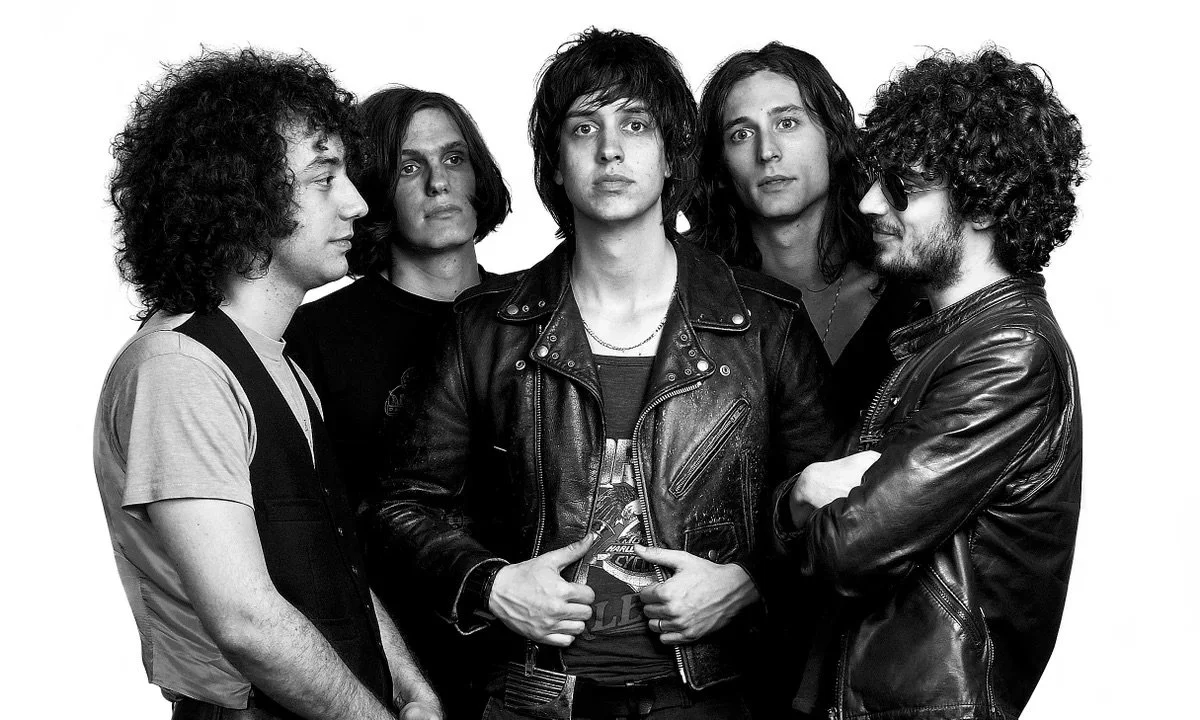
25 years after the release of their debut album, Is This It, The Strokes returned to the top of indie-rock headlines with their newest project, Reality Awaits. A blend of the familiar sound that sent them to nitrous oxide stardom and a new direction that tips its hat to their longevity, the record offers something for everyone who’s gotten on the ride at different steps of the way.
Sitting at nine songs and 42 minutes of runtime, the record opens with “Psycho Shit,” which features a melodic performance from the band that resembles Television’s “Torn Curtain.” This seems to be the perfect way to start the album, mirroring one of their earliest mused-upon influences. Whether this is the result of personal confabulation or an intentional prod by frontman Julian Casablancas is still unknown, but his lyrical attitude on many of the songs seems to suggest the latter.
It seamlessly transitions into track two, “Dine N’Dash,” which feels like the evil cousin of “The Adults Are Talking,” the opening track on their 2020 release The New Abnormal. The dark energy maintained through the first two songs sinks you into a new world created by the band, one that hadn’t been explored much throughout their discography. If you hadn’t caught up to this shift yet, Casablancas lays it out plainly in track three, “Lonely In the Future.”
‘You don't get it, it's a pity; Maybe you'll catch up sooner, rather than later, baby; It's lonely in the future,’ he vocalizes in the second verse.
It’s a song about not wanting to do the things that made him and the band popular in their early days, the sound that reinvigorated a genre. People hold on to and demand the past from him when he’s never been interested in rehashing it. Incidentally, or once again, likely not, the outro features the most autotune of the first three tracks, a feature that many have accused of being a bug in the lead-up to the album’s release. And yet, interestingly enough, the song, with the guitars jangling like coins in the pockets and Fabrizio Moretti’s tight drum-work, feels most familiar to the band’s past work.
The album's two singles, “Falling Out of Love” and “Going Shopping,” are tracks four and six, sandwiching “Going to Babble On.” That fifth track, in many ways, feels like it could’ve been a strong single as well, playing like a traditional radio hit. There’s a warm fuzziness to it at first, which plays differently the more you listen to Casablancas’ words. He transmits an air of despair, both lyrically and tonally, which, paired with a gorgeous guitar riff to outro the song, has your mind wandering off to faraway plains.
All of a sudden, everything gets stripped back. “Liar’s Remorse,” the seventh song on the album, is mostly Casablancas vocals, creating an atmosphere that engulfs you. It’ll be interesting to see what the band does when performing it live, if they even do, considering the lack of instrumentation. It feels more akin to his solo work on Phrazes for the Young than anything else.
Again, there’s a shift in feeling as they take you on an acid trip for “The Fruits of Conquest.” Casablancas seems to think he’s a leech? Unsure, he’ll need to repeat it a few more times.
Everything comes to a head with the closing track, “Tyrants of the Mellow Moon.” The Strokes have never been shy to end an album with a musical epic, and this one is no different. It might even stand at the top of the heap. It opens with beautiful guitar instrumentation and lyrics that sound immediately familiar to anyone who’s listened to the band’s performance of “The Adults are Talking” at Lollapalooza Brazil 2022.
As the name suggests, it is mellow and subdued, but with a protuberant core that’s beating away at the steel cage it's been placed in. The tension created allows it to ascend.
When you take a step back from the song-by-song details of the album and look at the project as a whole, it speaks a few things clearly as day. Casablancas is at his most world-conscious, tackling the political powers and elites that control and manipulate, as he sees it. It feels like the work he’s been building up to for a while, as his socially-conscious persona has shown itself in public more and more. The rest of the band is tight as ever, doing what they’ve always done and growing into things they hadn’t done before.
The magic of Reality Awaits grows and grows with each listen, almost as if your brain adapts and starts to catch up with the future that The Strokes live in. You can only ask an artist to continue pushing the limits of their creativity, and they’ve proved once more, if nothing else, that they’re yet to be creatively bankrupt. It’s new and old, fun and emotional, and a reminder of why we still care about The Strokes.