Q&A: Fiona Tagami of Whisper Doll Talks Finding Community With New Album ‘Lucky Clover’
WRITTEN BY OSCAR ORTEGA
✮ ⋆ ˚。𖦹 ⋆。°✩
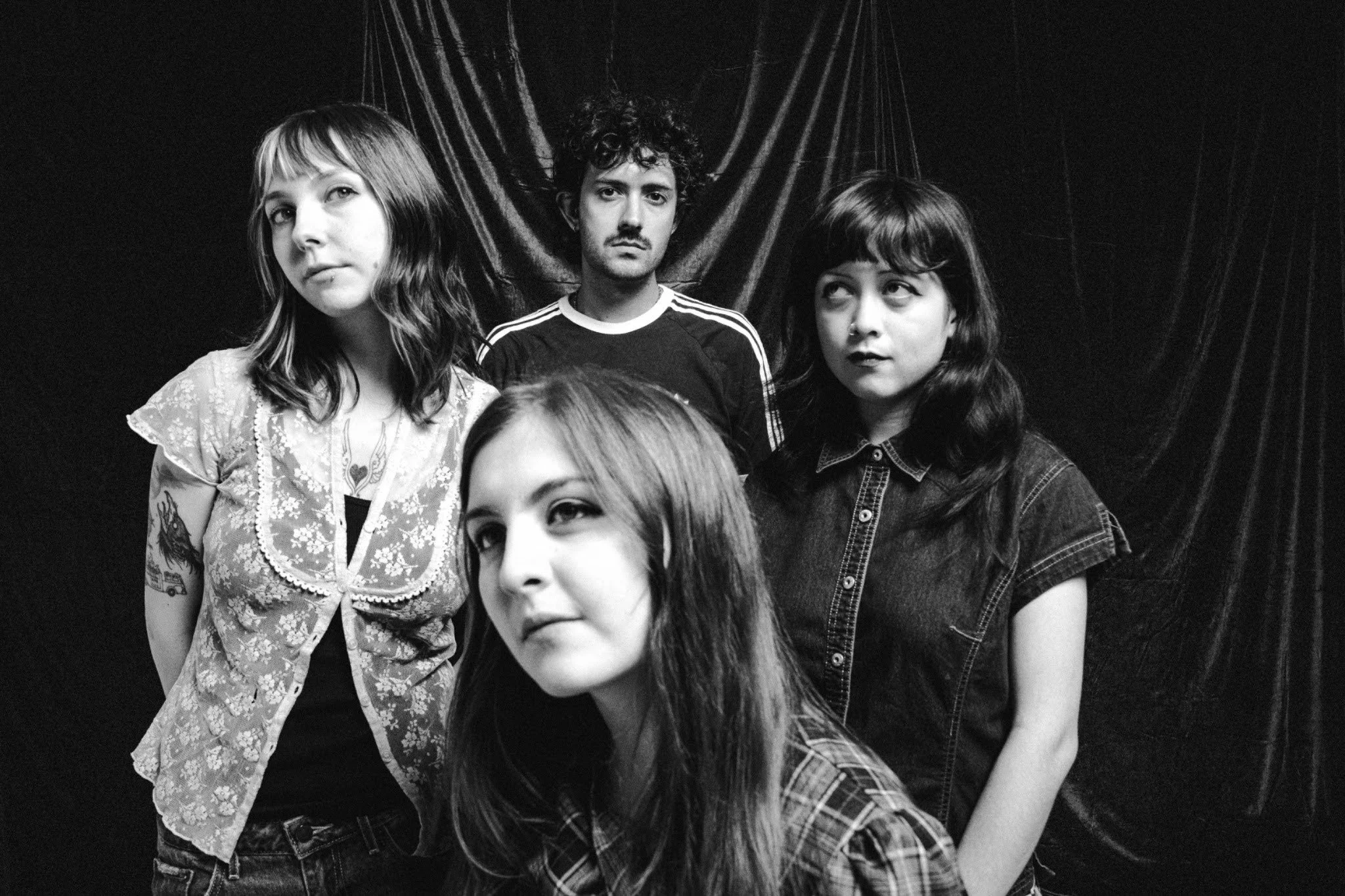
When frontwoman Fiona Tagami began working on Whisper Doll’s newest record Lucky Clover, she’d just moved from a tiny apartment in the West Village to an expansive show house in Brooklyn. Vines crept over her bedroom window like a whimsical cottage. She befriended a cat that lived at the bodega across the street, eventually adopting him and naming him Lucky. Scenes like these make their way into Whisper Doll’s newest record, not through its lyrics but its instrumentation and atmosphere. Twinkling guitars reverberate amidst Tagami’s feather-like vocals, with acoustic guitars laying the foundation for tracks that shimmer with a sense of whimsy and optimism. It’s the kind of record Tagami wanted to make.
Whisper Doll began as a solo project while Tagami was in high school in Atlanta. There, she met friends and musicians who would help contribute to her debut album Perfume Garden. However, moving to New York City meant leaving everything behind and starting anew. After some time in the city’s evolving indie scene, she’d eventually find a community of people that shared a similar vision. Taking inspiration from Tagami’s personal life and the fantasyland she dreams about in her head, Lucky Clover sits in that intersection. It’s an optimistic world where light shines in every corner, where people are surrounded by community and the things they love. And in a reality where the opposite seems to be true, that outlook is more important than ever.
On Lucky Clover, Tagami not only documents the transition from a solo act to a full-fledged band but also the sense of community that comes along with that. Lyrics about friendship and heartbreak weave through cascading synths and luscious guitars, creating an optimistic dreamworld that’s impossible not to envision. Meticulously crafted and sonically rich, Lucky Clover invites us into this ethereal space, one that is intimate, colorful, and fully realized.
✮ ⋆ ˚。𖦹 ⋆。°✩✮ ⋆ ˚。𖦹 ⋆。°✩✮ ⋆ ˚。𖦹 ⋆。°✩
LIFE ON JUPITER: Lucky Clover is your first full-length release since Perfume Garden. Since then, a lot has happened with the band itself. How does it feel having your first album out as a band instead of a solo project?
TAGAMI: It feels really good because we’re gearing more towards a community feeling. We’re diving a little more into the scene here in New York. Everybody that is in the band, I met through this scene, and I was able to feel more grounded and find a little bit of a community. It feels really gratifying.
The band originally started as a solo project and now it’s blossomed into this new unit, and I was wondering how you navigated going from a solo project to a more collaborative setting?
TAGAMI: That’s a good question. It just sort of happened. The drummer and guitarist were with me when I was making the first record. I recorded it in Atlanta cause that’s where I had the resources to do it. I had a friend who worked at a little studio, so every time I’d go back, we’d record more of the record with him and some friends from high school. They were definitely along for the journey.
A lot of people have bands in very different ways. Here [in New York], there are so many different ways to do it and I didn’t realize that. I guess going into it, I thought everything was clear-cut—the collaboration was just there and equally distributed. That’s not really how most bands work, but it’s been really cool to open that world up and really lock in our live sound as we’ve been working on this and as it’s been rolling out.
How has that changed the creative process leading up to the record?
TAGAMI: I worked very closely with a friend who produced a lot of the record, so there’s been more collaboration overall. The process was very different. When I was making the first record, I was in a band in high school and they were all world-class musicians, and I would just send them voice memos, and we would hop into the studio and have a new song by the end of the day. It was pretty incredible. That’s obviously a very unique way to go about it. Usually we have to prepare quite a bit before going into a studio, but we had this space that my friend had access to for very cheap. I had all my friends who were doing it for fun and were really talented, and it just worked like that.
This one I’d say happened a lot quicker. It was a more dense project. I was either working on it with a producer, with the band, or by myself every single day for the past year. Whereas the other record happened over the course of three years, compiling songs whenever I could be back in Atlanta. The process has definitely changed, but everyone’s process is so different, and that’s the beauty of it.
Lucky Clover is your first record that is fully in New York and I was reading how the basis of the record was rooted in your newfound space in Brooklyn. How has your environment shaped the development of the record?
TAGAMI: I actually don’t live in that house anymore, but when I did, it definitely felt like a new beginning. It was a very beautiful room in a peaceful neighborhood in South Brooklyn. There were vines growing over the window; it was a very old house with creaky floorboards, and it felt very inspiring to just be in my room late at night writing. “Bluebells” came from a dream where those vines grew from the windows and wrapped around me. Where I’m writing, you can look around and feel inspired. I try to make every space I live in feel like me. Being inspired by my surroundings just happens naturally.
I’m so glad you brought up “Bluebells” because I love the music video for it. It’s very whimsical, surreal, and it very much captures the essence of the record. What was making the music video like?
TAGAMI: The process was crazy. I made a shot list beforehand, drawing out frames and the storylines. There were four of us plus Owen [Lehman] who shot it, so five people total. It’s really hard to get five people’s schedules to align in New York. And we were looking for a garden to shoot it in. There aren’t many gardens to shoot in New York, so we had to look elsewhere, and we stumbled upon Bard’s [College] campus. We were going on a little mini weekender tour, so we decided to shoot it on the way to our tour stop. I had all these props with me and we shoved them in this little car along with our amps and gear. I set up the opening scene and we shot throughout the day. It was very frantic; it was like four or five hours of shooting nonstop. It was extremely chaotic but I really like the video because it feels very carefree. You can tell that it was a spur-of-the-moment thing, knowing that we had to make it work. It feels very carefree and that’s because it had to be.
Which is funny because I was listening to the record and it does feel very carefree. It’s very bouncy and even when the lyrics are talking about something that’s a little more personal, it doesn’t stop it from keeping that upbeat nature.
TAGAMI: Thank you. I really like artists that will write about something sad but the music sounds happy. I really like dichotomy in music. I feel like it’s very intriguing. So I’m glad you picked up on that.
The record sounds like it came from that initial wave of late 80s/early 90s jangle pop. I’m thinking of The Sundays and Cocteau Twins’ Four-Calendar Cafe. What was the musical journey that landed you in that space?
TAGAMI: It's funny, I got into music a little later. I grew up in the south, so I listened to a lot of country music cause that’s what was on the radio. I never had an iPod or a way to access new music. My dad had a lot of original Elliott Smith CDs that he got at concerts, and then he turned me onto Nick Drake, who is one of my favorite artists of all time. But other than that, I didn’t have a huge musical reference pool until I was 16 or 17, and that’s when I really got into music because I started to write more.
I don’t know exactly how it happened. I think I was really drawn to Cocteau Twins through finding their cover art. And that led me to The Sundays, which have been my favorite band since forever. I remember seeing imagery of Katie Jane Garside, who was an avant-garde artist from the ‘90s. She was a very violent performer. She had a lot of visceral imagery in her live performances and I remember really grabbing onto that and being interested in this loud-soft dynamic; this violent but sweet dynamic. That dichotomy that we were talking about earlier, which inspired me on Perfume Garden. Katie Jane Garside and Nick Drake were really big inspos for the first record and now I feel like I’m going back into my dream pop roots.
One thing that I was also reading was that the track “Apple A Day” was inspired by the 1966 film Daisies and I was wondering where that came from.
TAGAMI: I don’t know why, but I really wanted to write a song with the word ‘apple’ in it. And there’s a scene in Daisies where they’re hopping around a tree. I forget if it was an apple tree but the imagery really drew me in. Whisper Doll, the name of the project, comes from that movie. I was just really inspired when I saw that film. It was the first time I saw an avant-garde movie like that, especially one where the women were so carefree—it was completely their world, their narrative and storyline. I was really inspired by them and that movie. I drew from different plot points in the movie along with some personal stories in my life and weaved them together. It’s kinda like any song you’re writing, the inspiration just comes.
That’s one thing that I did want to touch up on. I read that a lot of the tracks were inspired by real events in your life. What was the process like of transcribing real events in your life into a song?
TAGAMI: Every songwriter takes aspects of their life and puts them in the music. I can’t say that it was any more unique than anyone else’s experiences. I’ve always taken bits and pieces of my life, dreams I’ve had, scenarios I’ve thought about.
It was pretty liberating in the moment to express yourself and scenarios in your life to other people in a way that they’ll understand.
Do you find it important to capture the experience itself or the retrospection that happens months later?
TAGAMI: That’s a good question. I think both. I think it’s really beautiful to sit down and write stream-of-consciousness about how you’re feeling in the moment. It’s almost like you can write two separate songs, you know? You can write two separate songs about your experience in the moment and then what you think about from a better perspective. I like to do both.
There’s a sense of brimming optimism within every track. Standout tracks to me are how the guitars flutter with a dreamy reverb in “Bluebells” and “Bloody Knees,” and even the slower songs like “So Sweet” and “Am I A Knife,” they never really lose that touch. Was it important to keep that optimistic ethos central to the record?
TAGAMI: Yeah, I think it was. I talk a lot about a switch in my life about trying to be positive because there are so many things that can get you down. You can’t obviously choose to override your mental illness or depression, but you can choose to try to see things in a positive light as much as possible, despite any circumstances you might be in. That feels extremely necessary; it feels like that’s how it has to be and I think about that a lot. And it’s a really big inspiration, you know, choosing to be hopeful.
Do you have a favorite track from the record?
TAGAMI: It changes. I really like the title track because it was also very stream-of-consciousness. It just kinda happened. I like how hopeful it is. Oscar [Compo] added some cool Cocteau Twins-esque guitar licks that I’m obsessed with. And “Bluebells,” I love that song.
Now that Whisper Doll is a fully fledged band, what is the future of Whisper Doll and what should fans be expecting?
TAGAMI: Who’s to say, really? I’ll always be writing so we’ll just see what happens. But I can say that the next record after this is already shaping to be a little bit darker but still maintaining the optimism, I hope. I’ll definitely still be a dream pop fan; we’ll still have those Cocteau Twins guitars and The Sundays-inspired melodies, for sure.
There are already plans for a follow up?
TAGAMI: Yeah, I’ve been recording some acoustic demos and working on some stuff with the band as well. We’ve been performing a song called “Carry My Love” a lot live. There’s a long gap between finishing the record and putting it out. This is my first time with a record label, and I’m realizing how much time you really have. I’m always writing and I’m excited to see how our sound evolves.