Q&A: swell foop on the Evolution of Their Visuals and Sound
WRITTEN BY LOGAN FLEMING
✮ ⋆ ˚。𖦹 ⋆。°✩
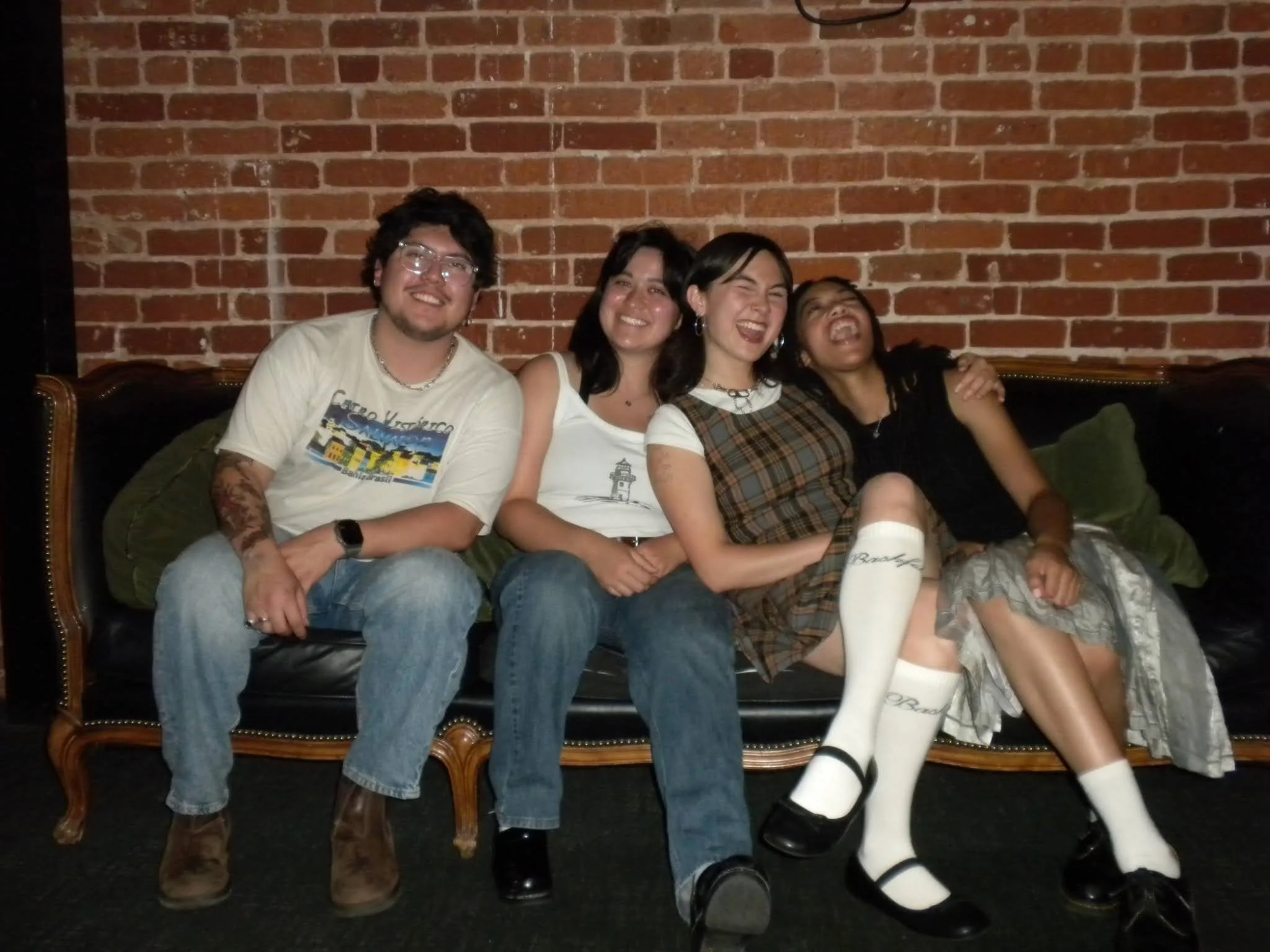
Photo by Adelia Hubbard - @bugs4brainsss
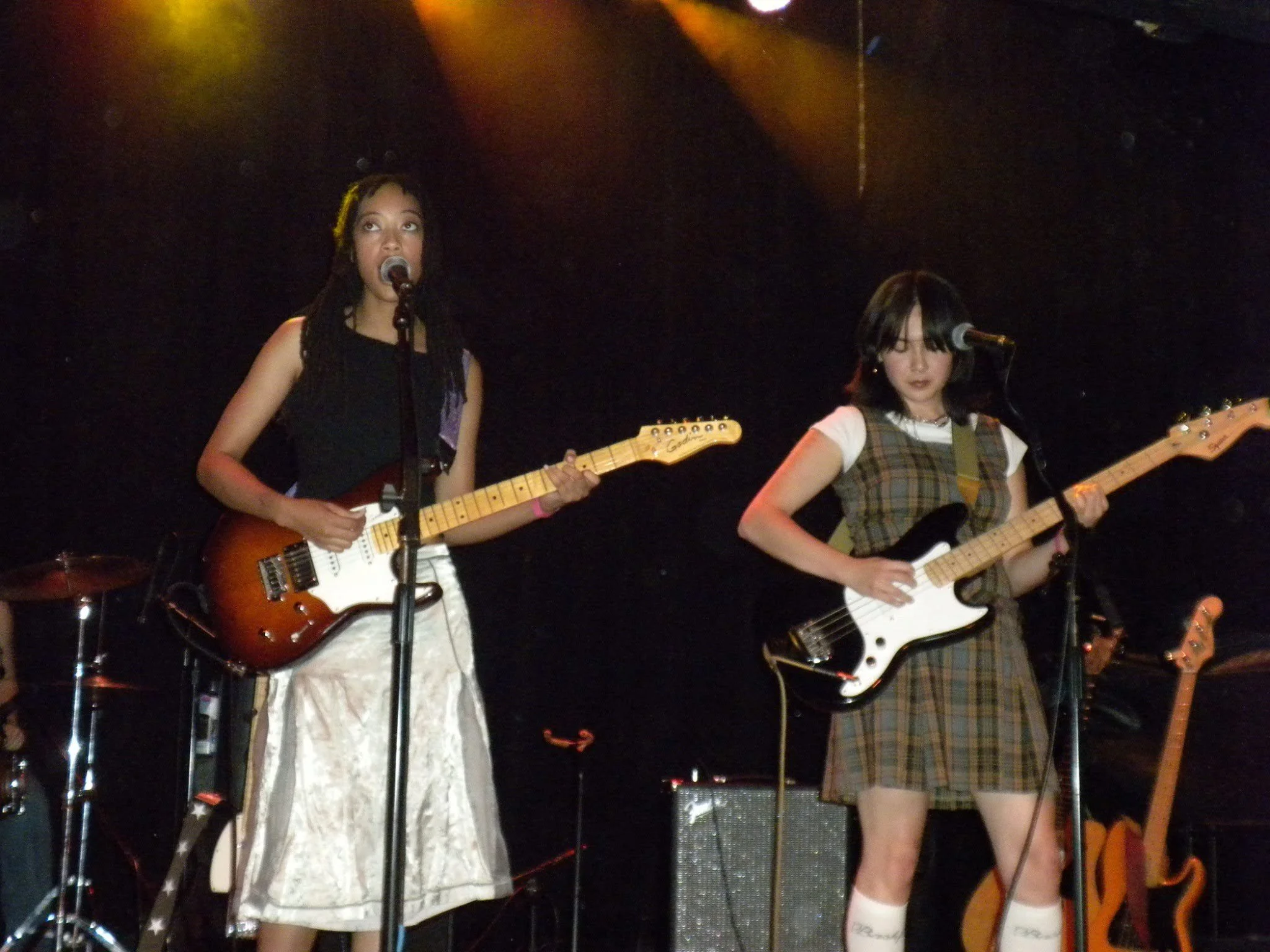
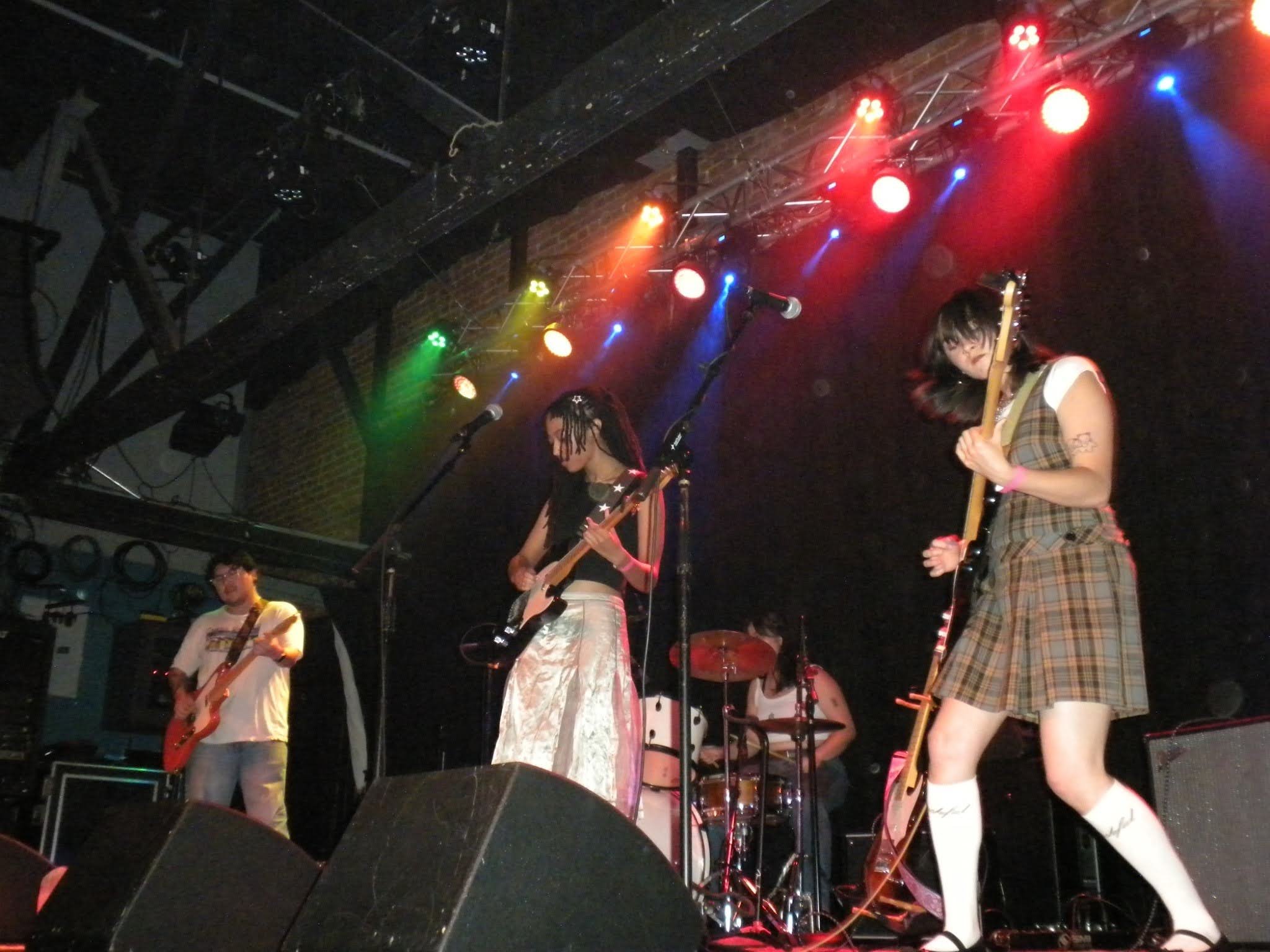
Since the last time we spoke with Bay Area band swell foop last September, they’ve graduated from Berkeley house shows to historic venues like The Great American Music Hall, where they’ll be playing Psyched! Fest this October. They’ve made Spotify's ‘Lorem’ playlist, catapulting them to 25.5K monthly listeners on the platform, and their listenership is growing every day.
The group, which is comprised of Sophia Shen on vocals and guitar, Miranda Loyer on vocals and bass, Tiena Elias on the drums and their producer Ivan Garcia on lead guitar, has made considerable changes from their early sound and imagery over the last five years, all the while remaining consistent with their thematic and lyrical exploration of “femininity, identity and change.”
We caught up with the group before the last show of their Southern California tour in Santa Barbara on August 18 where we discussed tour life, their writing process and the evolution of their visuals and sound. The band recently released their latest song “Spilled,” the lead single from their upcoming debut album out later this year. Read our full discussion with Swell Foop below.
✮ ⋆ ˚。𖦹 ⋆。°✩✮ ⋆ ˚。𖦹 ⋆。°✩✮ ⋆ ˚。𖦹 ⋆。°✩
LIFE ON JUPITER: Swell Foop formed as a band in 2021, and the last time we spoke with you for Life On Jupiter was last September. How have you all changed over time, and how has that impacted your sound and the creative process?
SOPHIA SHEN: I graduated a year ago in May 2025, and I feel like the past year of my life has been characterized by pouring a lot more effort into this band, and with that has come an inner acknowledgement of the fact that I want to be a musician. It is very healing and beautiful to say with my chest. “I'm a musician.” I'm working up the courage to do that, because it's not something that many people take seriously when you're starting out, but we've proven ourselves through all of our hard work over the past year and before that as well. But we're really locking in now.
MIRANDA LOYER: Before I joined this band, I was writing a lot of like singer-songwriter acoustic stuff and I was listening to a lot of Joni Mitchell. I hadn't yet decided that I wanted to be a musician. There was a very specific point where I started writing songs for Swell Foop, and I felt like that started to be my best stuff. I just feel like I’ve gotten so much better. I'm so much more intentional now. I feel supported by this group of people; I'm never worried about how things are gonna come together, because I have everything that I need to make the kind of art that I want to make.
TIENA ELIAS: I joined the band in 2023, and I'd say Swell Foop has changed me as a musician. It's really been a challenge for me learning how to really dial in on my drumming and getting things to be just the most concise and accurate and, I guess, perfect–especially in the recording process. I'd never recorded prior to being in this band, so I feel like I learned a ton from that experience.
IVAN GARCIA: I come at it from a different perspective, because I recorded and produced all of their music, and it's really cool to see their growth. You know, to see it from the first EP that we did, which was two and a half years ago. We didn't think anything of it. It was like, “Oh, this is really sick. This is fucking awesome. And, you know, hopefully people will hear it,” and they did. It took a while, but people started to hear it and listen and take notice. I think if you write good music, people will find it. People find good art, you know? I'm really proud of them, and I'm really happy to have joined; I’m playing guitar with them for these shows.
SHEN: Ivan has really been a collaborator in terms of the arrangement, and has written a bunch of the guitar parts, played a bunch of the guitar parts too. He’s a very active producer and takes our music to the next level. So props to Ivan, best in the Bay if you ask me.
You have a line on the song “Sedate Me” about your music being ‘too political.’ Has it always been that way? Have you always felt like that?
SHEN: That song, “Sedate Me,” I wrote in 2023. It was because of a friend of mine, who's also a journalist, so I feel like she's a very inquisitive person, and she had asked if I feel like all of the art I make is political, and I said no, because I don't think that things necessarily have to be political. But after thinking through that, like, “Is my music political?” I feel like I ended on the idea that I don't need it all to be, but I do think that my music should say something, and I want to be clear about that, and about our values.
The Riot Grrrl movement is a huge inspiration for our beliefs. Bikini Kill, Le Tigre. Tiena loves Joan Jett. We love Mannequin Pussy. They're awesome. We have all of these amazing female role models who are musicians that we look up to.
What does the songwriting process look like for the four of you right now?
LOYER: It's funny because now I live in LA and Sophia lives in San Francisco, but we write the same way that we've always written. We record voice memos and sort of swap them back and forth. We rarely ever write in the same room. I'll do something, and then I'll send it to them (Sophia), and then we work it out together. Then when we bring it to Tiena, we sort of build it up from ground zero, and then we take it to Ivan.
SHEN: So much of this band exists over text messages because of the distance, but it works for us. Me and Miranda both were songwriters on our own and had our own music before we started writing together. I think our upcoming album is three of my original songs, four of Miranda's, and two that we wrote together. So it's quite an even split.
Do you have a release date for that yet?
SHEN: It's coming out November 13, and our first single is gonna be out September 4.
How do the writing styles differ between the two of you?
SHEN: Miranda and I talk about how each of our songwriting has influenced the other. I came into the band writing these up-tempo, very cotton candy, just fun, catchy hooks, fun to play live, type of songs. Miranda wrote these really deep and kind of solemn, introspective, acoustic guitar ballads.
Now on the album, my two songs are slow and acoustic and they have this big build. Miranda's writing is straight-ahead rock anthems. So we really have blended our styles in the best way, and I think pushed each other to be better songwriters in the process.
As a band, you have a very cohesive image and taste across social media and your EP covers. Where does that artistic sensibility come from?
SHEN: We both (Sophia and Miranda) studied art history, so I feel like there is an aspect of that compositionally or texturally. We're all also perfectionists, and so everything has to be just so, which can be so exhausting sometimes, but I think that it's definitely come through from a lot of trial and error, and us kind of starting to look within and decide, “What is this aesthetic that we want to present to the world?” And we've cleaned up our act in the past several months. I think it was definitely looking more thrown together and DIY for a bit. But we just started working with this creative director, Ally Wei, as part of our album rollout. She's helping us sort out what our aesthetic is, and I think that's really taking us to the next level.
What’s on the moodboard? What’s on the Pinterest?
LOYER: Well, a lot of film stills; I'm really into movies. For a song like “Spilled,” there's already imagery baked into that. I was thinking about a scene in a Hitchcock movie called Suspicion, where Cary Grant carries a glass of milk up the stairs, and it's glowing, and the inside lore is that they put a light bulb in the milk to make it seem very ominous. So that was an idea that I was thinking about a lot. And then obviously, there's the saying, “there's no use crying over spilled milk,” and that sort of felt like it was in conversation with the lyrics of the song. Milk ended up being the perfect symbol, but also evocative, eerie, kind of thing.
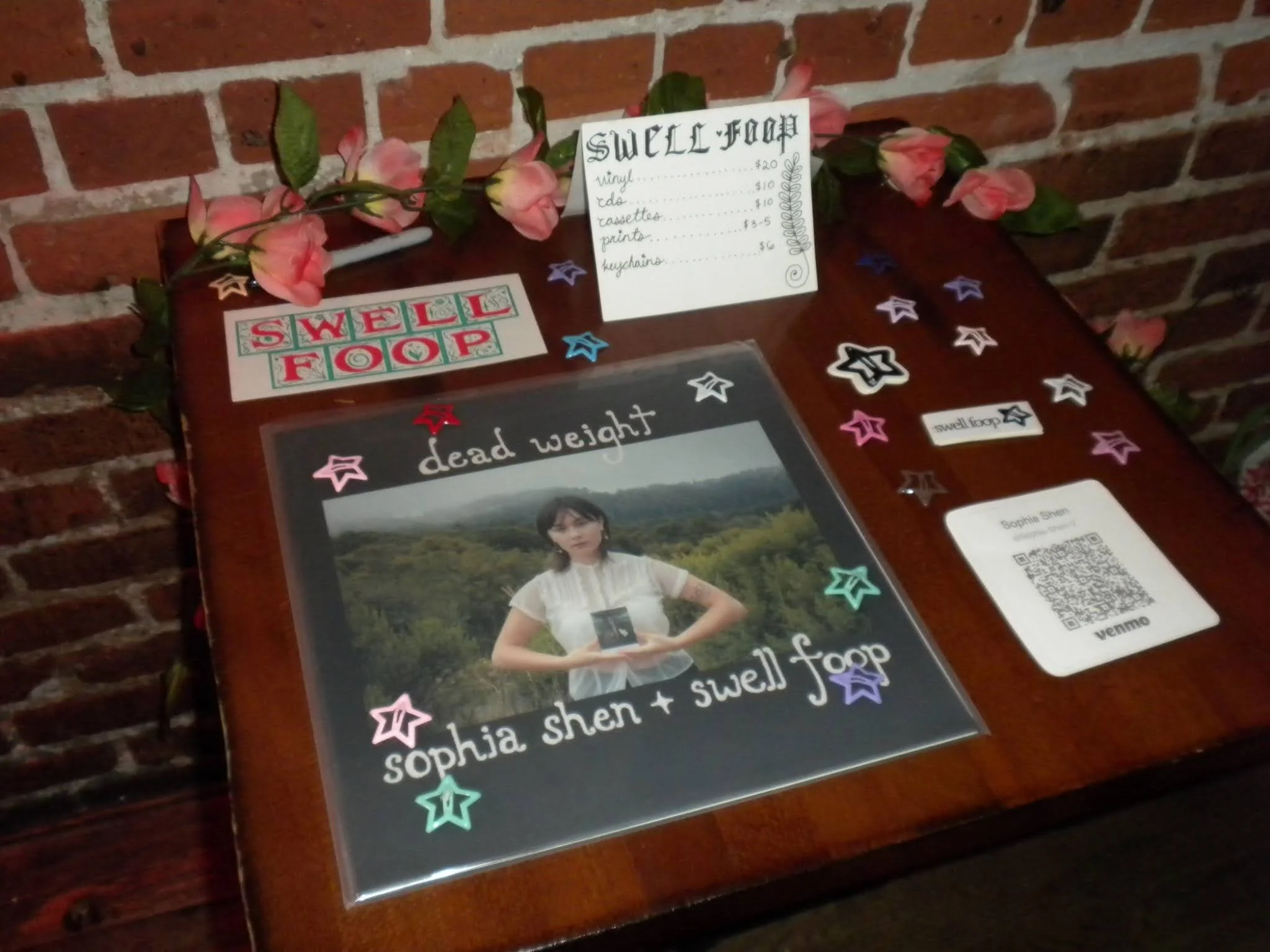
GARCIA: I also like that all the covers they have, it’s like a physical thing.
SHEN: There's an element of craft, which I feel like we also totally talked about in art history. I originally got the idea for the diamond-shaped metal plate from a tattoo artist that popped up on Instagram. It was a hand-embossed piece of tin foil that was just for a giveaway they were doing. And I was like, “Wait, this looks amazing.” And something about that shape is really compelling. So I saved it for a rainy day. And then somebody that I knew from high school is a metalwork artist in New York. Their name's Belle Zhao, and they fabricated the metal plate. It's laser engraved.
You’ve all been on the road as a band for the past few days; what has that experience been like?
ELIAS: I'm playing in another band, Meat Cube, that's also on this tour. So I've been traveling with them because that's just how it worked out with rides. But I'd say it's been a lot more fun than I expected. I kind of was expecting all the grueling parts of being in a packed car, staying up late, but we're having a blast, just like joking around, listening to CDs, and eating snacks.
Is that stressful? Playing in both bands?
ELIAS: Yeah, it is. I always underestimate how stressful it is to play double sets. It's very draining emotionally and physically. Every night has been back to back. First set, second set, no breaks. Meat Cube is going on to play a few more shows, but tonight’s the last time we'll be doing the back-to-back situation, so I'll give it my all. And tomorrow we have a day off, so I'm really excited.
Have there been any big differences you noticed playing shows in Northern California versus the shows you’ve played on this Southern California tour?
ELIAS: I feel like I haven't gathered enough data to compare them, but I will say what I love about the Bay Area music scene is that if you are a band in one city, it's super accessible to play in like Oakland, Richmond, Alameda, Albany, Berkeley, San Francisco. Like everything is really interconnected and all the bands from all those places collaborate a lot. So it's a big network.
GARCIA: It’s bloomed quite a bit in the past few years. A lot of bands coming out of the Bay, a lot of cool music and stuff going on.
SHEN: I've been curious about people's willingness to mobilize to shows because I think sometimes it is tough to get a crowd out for our genre of music in the Bay. The Bay has a very strong punk and hardcore tradition. So there's a scene that exists around both of those genres of music. But for more individualized, very personal singer-songwriters, which is kind of the core of our music, we brought that to this full band format – that, I think, is stronger in LA. Because singer-songwriters move to LA and then build their band from here. So there's more of a culture for indie rock and indie pop and that sort of slice of the scene.
How did you feel about the shows in Los Angeles and San Diego?
LOYER: LA, we felt like there was a lot of pressure for that show. And so our feelings on how it went were kind of mixed, but we just had a great night in San Diego. Everyone at the venue, which was Banshee Bar, was so sweet and kind and friendly. We had a great turnout, and the show was awesome, so I think we were really happy with that.
SHEN: Yeah, we're kind of negotiating this new level of playing shows where there aren't just empty rooms that we're playing to, because that's definitely been the case; we've been a band for almost five years now. We started in UC Berkeley, so just like a college town, DIY venues and house shows and stuff, but for the past year or two, we've been playing bigger venues in the Bay, and this is our first time really playing outside of the Bay Area; Santa Cruz is the furthest we've gone. So it's a step up and that comes with more expectations and more nerves. We want to deliver for people who've been finding our music and streaming, and are here to support us. We wanna return that effort and care to them at our shows.