Q&A: Sugarhouse Talks ‘Dancing Alone,’ Nostalgic Dance Music and What Comes Next
WRITTEN BY ALICIA ZAMORA
✮ ⋆ ˚。𖦹 ⋆。°✩
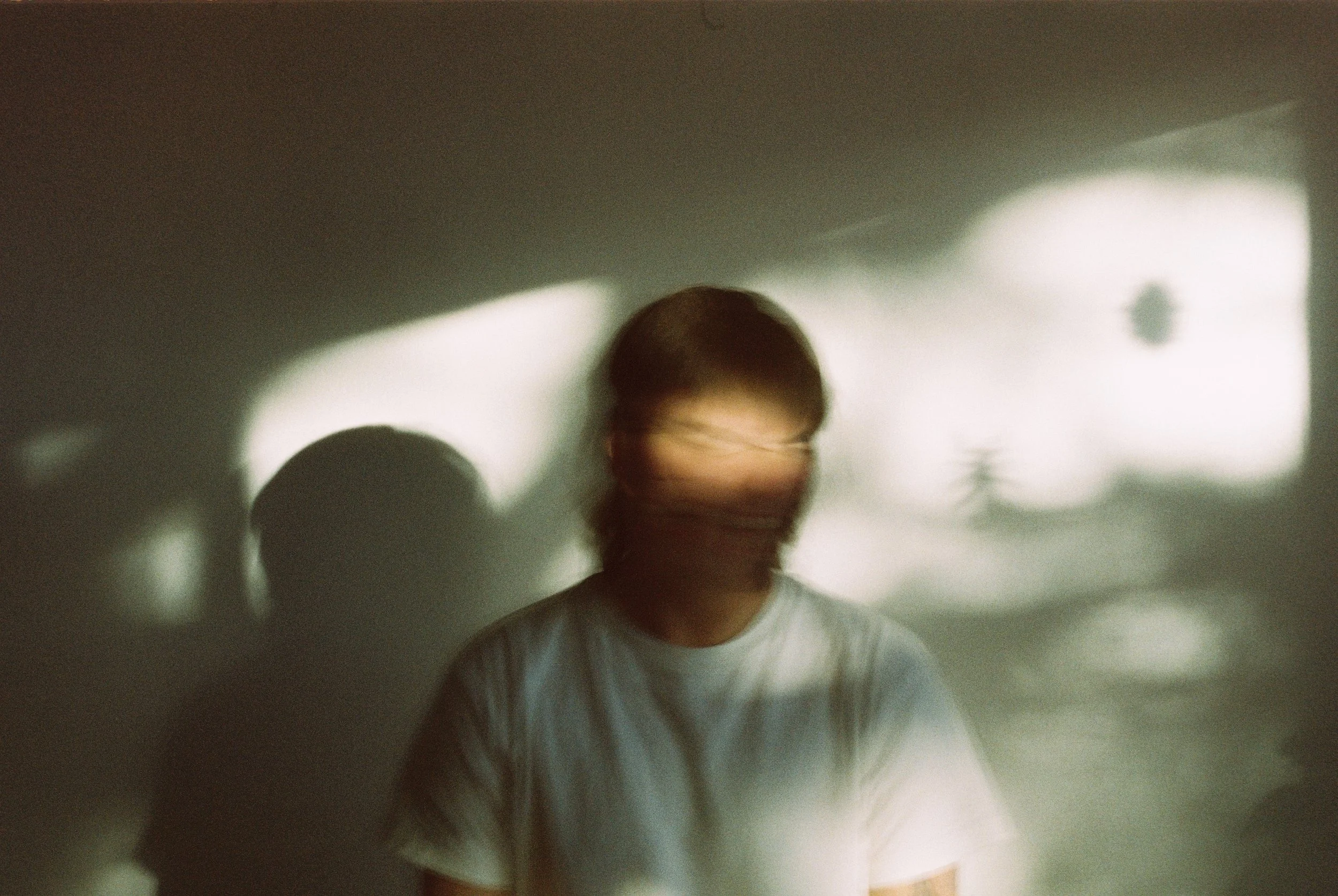
Photo by Carlos Alvarez
For Sugarhouse, making music is about following whatever feels interesting. The project came from wanting to step away from chasing trends and instead explore sound without worrying too much about where it fits. The result is bouncy, minimal dance music built around sugary synthesizers, nostalgic textures and the kind of energy that makes you want to move — even if you’re just the person in the crowd standing there with your arms crossed and head nodding.
Sugarhouse also gives its creator a different kind of freedom than their indie work. With vocals and lyrics taking a backseat, there’s more room to dive into synths, drum machines and production, drawing inspiration from everything from the Juno-106 to the Roland 909. After hearing Daphni’s Butterfly, that approach started to click: instead of forcing a song into a certain sound, the goal became letting it develop naturally and seeing how far an idea could go.
Coming from Texas and now based in Los Angeles, Sugarhouse pulls from different musical worlds while still finding its own place within dance music. Dancing Alone marks the beginning of that exploration, with the project already moving toward something more groovy and club-focused. With new hardware, more experimentation and even vocals on the horizon, Sugarhouse is still figuring out exactly where it’s going — and that seems to be part of the fun.
Read our full conversation with Sugarhouse below.
✮ ⋆ ˚。𖦹 ⋆。°✩✮ ⋆ ˚。𖦹 ⋆。°✩✮ ⋆ ˚。𖦹 ⋆。°✩
LIFE ON JUPITER: For people discovering Sugarhouse for the first time, how would you describe the project and what you want listeners to feel when they hear it?
SUGARHOUSE: I’d probably describe it as bouncy, minimal house music. I’m still figuring out exactly how to put this into a specific genre, but those are probably my main goals with these songs. I hope that my listener gets a bit excited and maybe just has a simple head nod to the music. It almost feels tailored to that person in the crowd who just stands there with their arms crossed, head nodding. Most of the emotion just feels like a good time to me, and I hope that they would feel the same. Hopefully, some dancing occurs too.
You said you’d tried making house music before and it “wasn’t really clicking.” What was wrong with those earlier attempts, and what did you finally understand differently when you started Sugarhouse?
SUGARHOUSE: I think when I first started, I was chasing after a trend, trying to make tech house music that had a catchy hook. Don’t get me wrong, I enjoyed making it, but then after a while, I’d really question if it was good or not. I think I still needed a lot of work on my production and just the general direction I was going. What clicked was when I listened to this album called Butterfly by Daphni and realized I just wanted to make whatever was interesting to me and explore those sounds as far as I could. It kept it more fun because I wasn’t really trying to mold my music into something. Instead, I let my music just flow out and worked with that. I’m still currently exploring, and I’m so excited for what’s to come with these micro-epiphanies regarding house music and production.
Since this is a new chapter for you creatively, what has making music as Sugarhouse allowed you to do that you couldn’t necessarily do with your previous projects?
SUGARHOUSE: Truthfully, just kind of taking a backseat on writing lyrics and recording vocals. I’ve been in a space where recording my own vocals feels a little too vulnerable and has stopped me from making my own recorded songs for a year or so now. I think I’m slowly coming back to it, but it also lets me dive deeper into hardware synthesizers and make music away from a guitar. The guitar is all I’ve ever known, and I’ve had a deep interest in synths but never found a way to really incorporate them into the sound I do with indie pop music, at least where it’s deeper and more interesting. It also lets me control my own project without feeling so out there with my vocals and lyrics. I still love putting music out; just with those two elements, there’s a ton of friction on my end to actually get something done.
You’re from Texas and now based in LA. Do those two places show up differently in the Sugarhouse sound? I’m wondering if there’s a difference between the music you grew up around and the music you’re surrounded by now.
SUGARHOUSE: I have a bit of a funny relationship with music listening. I don’t have much time to do it since I’m mostly working on it all day, or most days, and then I kind of get tired of it. I’d say I’m in a bit of a bubble when it comes to listening to new and different music. Back in Texas, I was definitely exposed to a lot more rap and Tejano. Those were kind of the pillars from my family side, like my parents and siblings. Then friends and skate videos showed me a lot of indie music that I still enjoy to this day. I’d say it does feel more LA with the scene here. There’s not much of a dance music scene in San Antonio that I know of that isn’t something like cumbia. That might be something to bring into the next project.
You’ve talked about wanting Sugarhouse to feel nostalgic. What does nostalgia sound like to you? Is it a certain synth, drum sound, chord progression, texture, etc.?
SUGARHOUSE: I think nostalgia definitely involves all of the above. Old synths like the Juno-106 and a Korg MS-20 can transport you to a specific time period. Juno is more lush and ’80s, with an open pad, whereas the MS-20 feels like the Acid House days with a really aggressive filter. Drums may take the cake here, though, because in house music you have the Roland 909, which kind of started this whole movement, if I’m not mistaken. A simple kick, snare, and hat placed in the right way will get you back to early garage or to the very first tech house tracks. Sampling older records definitely helps too. That’s the thing, though: with these tools, you can still create brand-new-sounding tracks if you process and orient them in a fresh way. So I hope to take these old machines and turn them into something fresh while also holding onto the heart of house music: just dancing.
You’ve described wanting to combine the conventions of house music with more experimental elements, which you were inspired to do after hearing Daphni’s Butterfly. What does experimentation look like for you when you’re producing?
SUGARHOUSE: Experimentation to me is just automating knobs, filters, echo, reverb, and arpeggiators with an LFO until I land on something that my human hands wouldn’t be able to do. I recently built up my synth chops after building out more of my modular synthesizer. One of my best friends, Taylor Moralez, helped me build it, then sat me down and explained the basics. It’s helped so much with getting something to do exactly what you want. The beauty of modular synthesis is that you can “automate” any single parameter, so it’s like you have 10 extra human hands turning knobs and adjusting things for you. I haven’t found a way to productively bring this hardware synth into my music beyond the basics, but I have found a way to bring that mindset into my DAW. Now I’ll add automation to most of my synths and play with things that I never had before exploring this.
There’s a balance in Sugarhouse between music that feels familiar and nostalgic and sounds that feel unexpected. How do you decide when a song needs to stay within the familiar versus when it’s time to push it somewhere stranger?
SUGARHOUSE: I know this sounds so vague, but it’s based on the emotion that I’m feeling at the time. If I get bored of it, maybe I’ll add a new section or try something new. I feel like I’ve barely scratched the surface with really pushing it to another world, but that’s something I’m very interested in trying. To start, I’ve put myself under a constraint to actually finish these songs because it feels like a blank canvas every time I show up to make music. Having a sort of “experimental” boundary helps me get songs to the finish line sometimes.
The debut single “Licker” gives listeners their first real introduction to this project. What was it about that song that made it feel like the right starting point for Sugarhouse?
SUGARHOUSE: Honestly, at the time, I thought it was maybe like a middle-of-the-road song for me. Meaning it wasn’t the one that stuck out the most, but it was still good enough for me to release. I didn’t want to put my best out yet. I think that sounds bad to say, but I still love the song. At the time, I just felt that there was better to come. It also felt exciting to me and felt consistent with the other tracks that I was working on.
What’s a production choice on the EP that you think people might not notice on their first listen but you’re particularly proud of?
SUGARHOUSE: That the EP track “Dancing Alone” is actually a departure from the first three singles that I put out. I’ve had the idea to hold onto the consistent sound and make the final track the bridge to the next set of singles I'll be putting out.
Now that Dancing Alone is introducing Sugarhouse to the world, what are you most excited to explore next with the project?
SUGARHOUSE: I feel like the next project is way more dance-focused! I’m stoked to make it way more groovy and perhaps club-ready. Still a bit ethereal at times, but more tasteful. I’m also stoked to get my Elektron Syntakt in the mix. I’ve been having so much fun getting to know this groovebox and making new tracks with it. Finally going to start bringing in some vocals, too.
What do you think people who know you from your indie work will be most surprised by when they hear Dancing Alone?
SUGARHOUSE: That I have an interest in making this kind of music too. Maybe the sound exploration and different vibe I can make? Not sure, maybe there are similarities to both that I’ve yet to notice myself. I hope it’s similar to when people find out that Golden Vessel is also 1tbsp. It just shows that you’re goated at both.
And finally, if you could put Sugarhouse into one sentence for someone who hasn’t heard it yet, what would you say?
SUGARHOUSE: Sugarhouse is nostalgic dance music with sugary ear-candy synths and production.