Q&A: A Look Inside Modern Woman’s Dreamworld
WRITTEN BY OSCAR ORTEGA
✮ ⋆ ˚。𖦹 ⋆。°✩
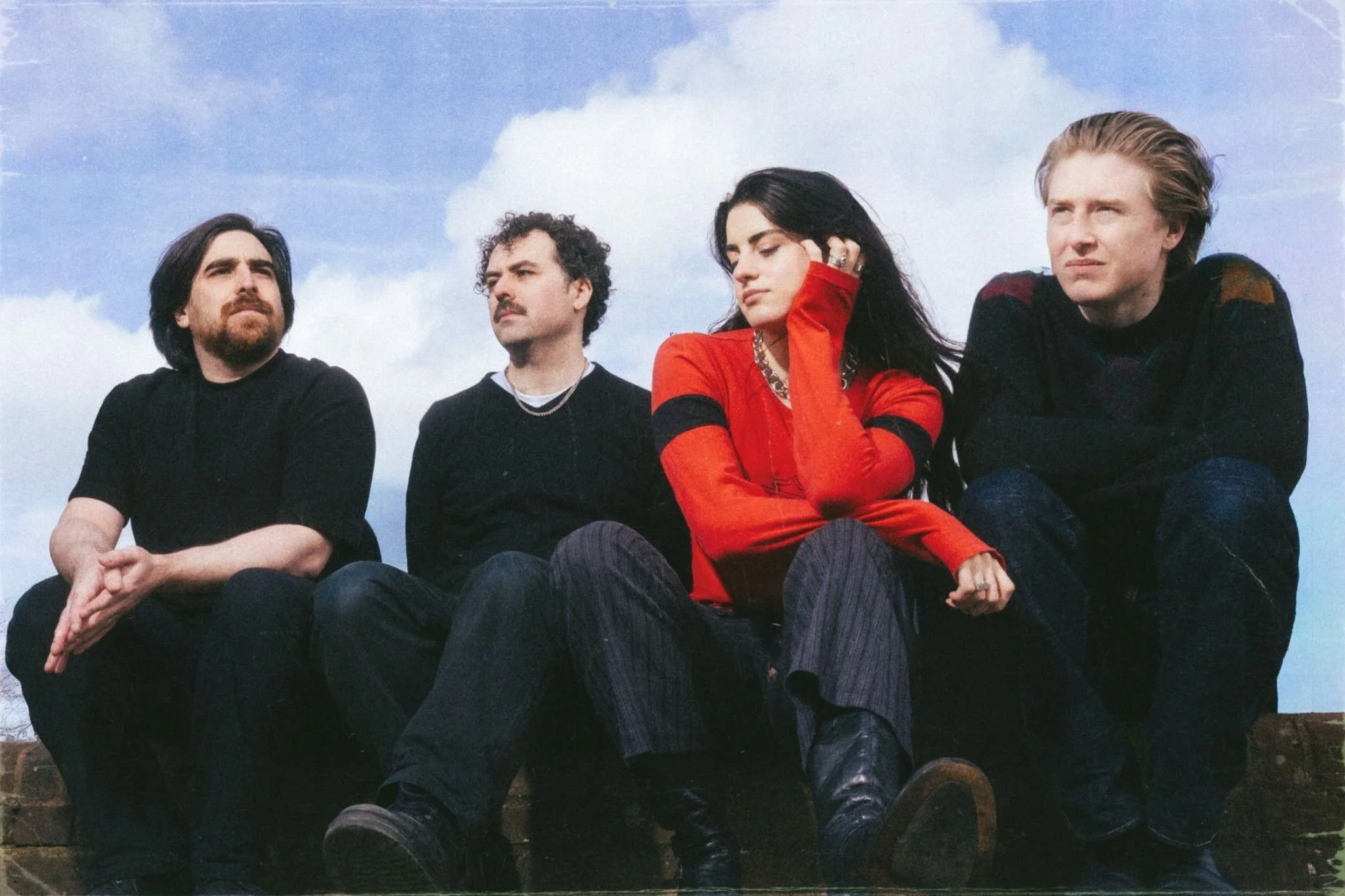
Photo by Sal Redpath
“I would say the songs were written very much separately,” Modern Woman frontwoman Sophie Harris tells me. “And though there are threads and themes that run throughout them, they exist very much by themselves.” From its opening track to its last, Johnny’s Dreamworld, Modern Woman’s debut album, released this month, leaves you guessing as to where the next track will take you. Tracks often vacillate between unrestrained aggression and intimate balladry. She viscerally screams about wanting to live inside someone’s fantasies; Harris’ incantatory voice breaks as she recounts killing and disposing of a dead body; she describes an intense obsession with her neighbor through wavering, psychotic vocals and imagery. It’s through these disparate modes of expression that Modern Woman gain their identity.
Modern Woman approach their experiences of heartbreak, obsession, loss, and isolation through a frenetic stream-of-consciousness. “I never consciously had particular themes or morals in mind when writing them, I just wrote about my own experience, or stories that interested me, often in a sort of cathartic way,” Harris explains. Opener and title track “Johnny’s Dreamworld” examines this catharsis in full. An idiosyncratic bassline and marching drum pattern drive the track through explosive breakdowns and moments of stillness. Harris weaves through a violent storm of emotions as angular guitars trash and jolt sporadically throughout, culminating in an abrupt finale that leaves our story open-ended.
Initially beginning as a solo project, the London art rock outfit bridges post punk, noise rock, and avant-garde folk to explore the inner complexities and contradictions of womanhood. “I find it interesting to explore the rawer side of femininity that is often hidden,” Harris says in a press release. Johnny’s Dreamworld questions the degree to which women are allowed to express themselves by unleashing everything all at once. How much is too much in a society where complex human emotions, particularly women’s emotions, are so easily scrutinized? Humorously, Harris has yet to understand this fascination herself. “Why I wanted to express those certain things… I’m not sure, maybe somebody with a degree in medicine could tell me someday.”
✮ ⋆ ˚。𖦹 ⋆。°✩✮ ⋆ ˚。𖦹 ⋆。°✩✮ ⋆ ˚。𖦹 ⋆。°✩
LIFE ON JUPITER: Hello, thank you so much for your time! You’ve mentioned before how you tend to write from personal experiences. Where were you when Modern Woman first began?
SOPHIE HARRIS: Thank you for having me! Modern Woman first began when I was in London - I’d moved there at 18, and had recently finished my degree, was looking for something to do.
What role do physical and imaginary locations play in the experiences you write about?
HARRIS: Imaginary a lot, actually. Though I do think imaginary locations always draw from real experience, it’s hard to know where the line is, isn’t it?
Modern Woman began as a solo project, which then evolved into a full-bodied band. Considering you’ve been working and refining your craft over a number of years, how has time changed and influenced the way you approached Johnny’s Dreamworld?
HARRIS: In many ways, I feel very different from when we started the record to when we ended it, I think we all do. You hear different things, get influenced by a variety of music as time goes on. I think before we started the record it was the same. People joined the band and brought different things, and the final lineup was created from years of trying things to see what stuck.
Is the approach to songwriting different now that you’re incorporating a lot more collaboration?
HARRIS: A little for sure, “Johnny’s Dreamworld,” the song, was written in the room together, so that felt nice. I’m sure we’ll do more of that going forward.
You’ve discussed how you’re drawn to conflicting things/ideas and how it’s a vital theme for Modern Woman. Is there a hidden beauty within conflict that is often misrepresented? Where do you draw that line, if at all?
HARRIS: It’s a broad question, I don’t think conflict is beautiful necessarily. Conflict as a word in itself denotes violence, anger, aggression - I don’t think violence or anger is beautiful at all. But conflict, when used as a synonym for juxtaposition, I think, can be striking - juxtaposition sort of elevates the two sides of the coin in a way that makes each side more real in contrast. I’m not sure whether beauty is the right word. But I think juxtaposition can make each side feel more real, more bold.
Bouncing off that, do you think the raw femininity you capture on the record balances that line?
HARRIS: It’s difficult to answer that question as it is a large and complicated one. But personally, in the lyrics, I just try to be honest about my own experiences and the stories that interest me, and present them as openly as possible.
A lot of the record’s narrative is told through memories and dreams: remembering the passing of a friend, the mundanity of a relationship, a terrible night with a dead body. What role do memories, dreams, and nostalgia play in the creative process?
HARRIS: A lot - I think they have a central role, because we are made up from our memories and dreams. Nostalgia, I like to use too, often because I find it an interesting feeling. I have often written about a dream I’ve had if it has made me feel weird, uncomfortable.
I noticed that Johnny’s Dreamworld is incredibly grand and almost theatrical in the way tracks play out. Moments wane before heading off into a big climax, like the finale of a film or play. Was there an intentionality behind it or did it naturally shape itself in that direction? Did the topics you were writing about influence this?
HARRIS: I think it naturally shaped itself that way - I think I’m only just learning how to write a song that doesn’t build into a climax to be honest - it seems to be our go-to, because it makes us excited and we get carried away.
But yeah, it was part of our interest in juxtaposition again - it’s what we were into at the time. We’re writing the next record soon, so let's see if that interest wanes or continues.
I think the way we all approach the songs is, at each decision-making point, we go with what we like in that moment - what feels good or exciting - so the songwriting is sort of a fluid process that is always changing and feels a little out of our own control. So I’m excited to see what happens when we go back into the room.
The title is taken from the opener and title track about wanting to be a part of someone’s fantasy life. Why choose that as the title of your debut and what significance does it hold? Lastly, how would you define Johnny’s Dreamworld and what contributed to that definition?
HARRIS: I was interested in the idea of the whole album being made up of lots of different stories, some of them with memories embedded within them, some of them catalysed by a dream or an experience, or whatever.
I named the opening track because it was about trying to get into someone else’s head when you fancied them. And it just felt right to be the title, because that’s sort of what I wanted the record to be, to create a little space in my head, and in everybody else’s head, when they listened to it.