Q&A: Lora Mouna Shares Her Experience with Dissociation on “The Difference”
WRITTEN BY AMANDA COLLINS
✮ ⋆ ˚。𖦹 ⋆。°✩
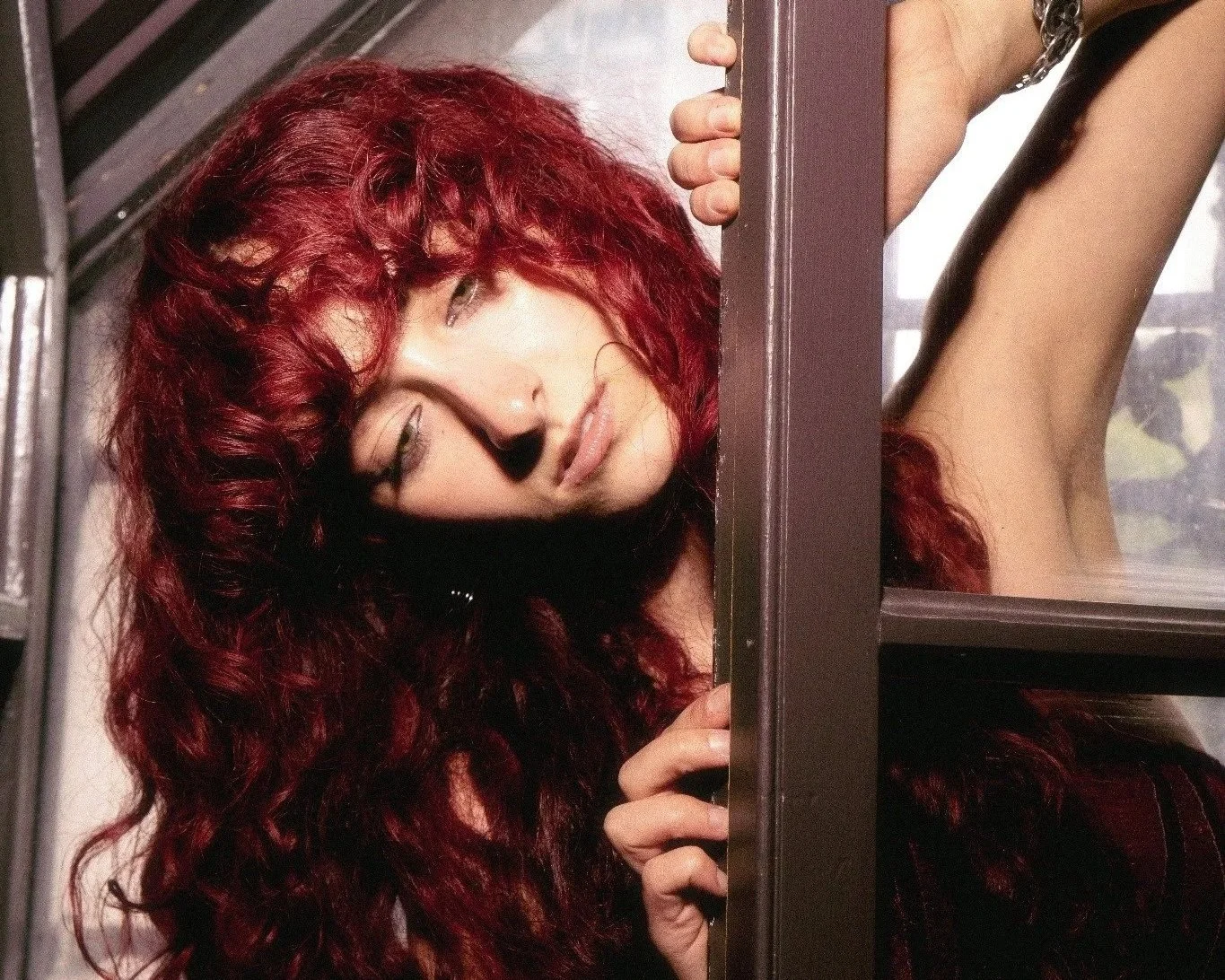
Photo by Stephanie Axelrod - @axelrodphotography
Syrian-American indie-rock artist Lora Mouna dropped her single “The Difference” on July 29, gifting listeners with a crescendoing piece that ties shoegaze, experimental techniques, and confessional songwriting together to encapsulate the often all-too-alienating experience of dissociation.
Equal parts somberly reflective and crushingly explosive, the track successfully takes listeners in a wide array of directions, mimicking the multidimensional nature of dissociation.
Diving into the sound, Lora Mouna states, “I think it felt different this time around because I really experimented sonically with what I could do to make this song feel palpable… I think that includes not having a strict structure to the song. I wasn't always singing traditional melodies, and I was speaking at the end of it and playing with the rhythm of the song to portray things falling apart and then falling back together, and I think it was so different writing about dissociation because it's so complex.”
Experimenting with structure, “The Difference” was recorded live and without a metronome. This allowed the band to truly dig their heels into the emotion of the moments, allowing “The Difference” to be emotionally rich and feel like dissociation incarnate. Mouna’s beautiful vocal flips are heard in the track, adding to the soundscape and song’s energizing turbulence. “The Difference” leaves listeners with a feeling that can be described as someone reaching for air loudly, unsure of how to pull themselves out of their distanced and confused state but refusing to stay silent within it, and existing anyhow.
Mouna is no stranger to dedicating her music to exploring mental health, as she has highlighted themes of depression and anxiety in previous tracks. Continuing her confessional songwriting style, Mouna reveals that the inspiration for “The Difference” came from a place of dissociation that “started back in 2022, when I lost several people in my life. It was a state of dissociation that I didn't get out of until like two years later.”
Dissociation is often understood as the mind creating distance between a person and the trauma or the overwhelming circumstances they find themselves in. This defense mechanism can often prove faulty, leaving those experiencing it even more isolated than before. “The Difference” and Mouna don’t shy away from the alienating sides of mental health at all but instead shine a bright light on the sticky, nauseatingly confusing aspects of dissociation.
Along with the release of “The Difference,” Mouna dropped her debut music video, where she portrays the wide range of emotions that come with feelings of dissociation, from numbness to defeat to rage. The video stands out, utilizing the symbol of a TV to honor themes from I Saw the TV Glow, cut scenes to mimic the distortion of time that comes with clinical dissociation, and Mouna’s strong acting. Mouna states, “There are so many different feelings that lie underneath dissociation, and that's why we dissociate in the first place. I wanted to portray as many emotions as I could within the song. There are feelings of numbness when the song is slower, and then there's rage that breaks out in the end, and then there's defeat at the end. There are just so many layers to dissociation.”
Read Life on Jupiter’s full discussion with the refreshingly earnest Lora Mouna below.
✮ ⋆ ˚。𖦹 ⋆。°✩✮ ⋆ ˚。𖦹 ⋆。°✩✮ ⋆ ˚。𖦹 ⋆。°✩
LIFE ON JUPITER: Thank you for speaking with Life on Jupiter! For readers who aren't familiar with you yet, who do you aim to be as a musician and a creative?
LORA MOUNA: I aim for my music to be an invitation to discover the hidden parts of yourself. I mainly write about my mental health, as you know, and so personifying my depression and anxiety is a way for me to confront it. It’s really a way for me to fully embody it, and then heal from it instead of avoiding it. So, I am hoping that I can help others in that way, and I strive to be a creative that doesn't shy away from heavy topics. I want people to see that these topics and hard times can be transmuted into light and art. I aim to challenge people's expectations when it comes to music, adding elements of surprise, whether that's non-traditional structures of a song, or an interesting melody line, or unexpected chords.
You’ve mentioned online that you studied opera before shifting toward indie rock. What inspired that change, and has your classical training influenced the way you approach your music today?
MOUNA: Yes, studying opera was actually a means for me to get to know my voice, and there are other ways and styles to do that, but that was the only style of singing that colleges around me offered to study. So I'm really grateful for it because it taught me so much of how vocal pedagogy works, which is the science of the voice, and how to sing healthily and play with different registers and ranges of my voice. But I knew I wasn't going to stay in that for very long; I just wanted to study it. It was actually musical theater that I wanted to get into before fully committing to being an independent artist, but it was so exhausting waiting for a yes in an audition. So I decided to take matters into my own hands and create my own project.
Who has had the biggest influence on you musically? Is there someone you consider your personal idol, whether in music or in life?
MOUNA: Yes. My biggest musical influences, consistently, have been Pierce the Veil or Paramore. Those are two bands that I completely immersed myself in growing up, and I'm really inspired by the way they have helped so many people. And if I'm able to do that as well with my music, I would be so immensely grateful. But my personal idols in life would have to be my parents. They are the epitome of hard work through passion. They showed me growing up that you can do absolutely anything, even if all the cards are against you. They both immigrated from Syria and have lived 1000 lives since. My mom was a pianist in Syria, came to America, became an architect and studied voice, and then became a pharmacist. So, she literally has so many things on her resume, and she was the one who encouraged me to write songs ever since I was little. My dad taught me that even when the entire world feels like it's against me, my piano never will be. So, they always taught me to pour my emotions into music, no matter what the stakes are, and to never give up on myself, no matter what others think, because, I mean, they did that. They're just such great examples of that, and they've believed in me when I didn't believe in myself time and time again. I look up to them so much, genuinely, whenever I feel defeated or feel burnt out in music. They are a huge reason why I keep going because they kept going for me despite all the adversity that they went through, and I feel like I owe them that.
Your dad's saying about the piano is so beautiful.
MOUNA: I know, it really stuck with me. It changed something in my brain chemistry when that happened. I was sobbing to him about a rejection letter I got from a music school, and he said that to me. He was like, "It doesn't matter if anyone rejects you because the piano never will.” And that was one of my first instruments. I was like, "Oh shit!” I remember I stopped crying. I was like, "Wait, you're right.” From then on, I just always go back to that whenever life feels really hard.
"The Difference" continues the conversation around your mental health, a theme that you've mentioned has been a throughline throughout your previous work, yet you've said it's "the closest you've come to making a song feel tangible in its emotion." Why do you think this is? Did writing about dissociation feel different from writing about other emotions?
MOUNA: Yes, I think it felt different this time around because I really experimented sonically with what I could do to make this song feel palpable. I think that includes not having a strict structure to the song. I wasn't always singing traditional melodies, and I was speaking at the end of it and playing with the rhythm of the song to portray things falling apart and then falling back together. I think it was so different writing about dissociation because it's so complex. There are so many different feelings that lie underneath dissociation, and that's why we dissociate in the first place. I wanted to portray as many emotions as I could within the song. There are feelings of numbness when the song is slower, and then there's rage that breaks out in the end, and then there's defeat at the end. There are just so many layers to dissociation, and I think that's different from writing a happy song. I feel like sometimes happiness can feel like there’s one level to it, but with dissociation it could be a whirlwind of things.
What has your experience with dissociation felt like? Was there a particular moment or experience that inspired "The Difference"?
MOUNA: My experience with dissociation started back in 2022, when I lost several people in my life through death and other circumstances. It was a state of dissociation that I didn't get out of until like two years later. It was really rough; I just really struggled with the feeling of grief, and I’ve healed a lot since then. Music was one of the only ways I was able to get myself to feel something, but my loved ones also ripped me out of that darkness time and time again. And, even though I've healed a lot since, and I feel like my feelings have thawed, and I can truly experience so many emotions again, I feel like the feeling does revisit me in moments where life is moving too fast, and I have a big life event just happen, or I'm like struggling with grief again because of a lost loved one, and I don't have time to process the emotion. So, it feels like I'm coating over it and just watching my life fly by, or I'm scared to feel it. The time around writing “The Difference” was such a collection of things that led me to that dissociation, which was around January or the end of last year. It was the remnants of a breakup from months prior while also working a full-time job, being a full-time student, pursuing my music career, and then having a family member pass away simultaneously. It was just so much and so many things to juggle within myself-and that's when I shut down. I felt that creeping back up again, and I was like, I have to face it one way or another. That's how the song was made because I couldn't run away from it anymore. It was enough.
On Instagram, you mentioned that it only took about an hour to create the track with your bandmates. Why do you think this song came together so quickly?
MOUNA: I think it's because the people I work with are genuinely some of the most talented and open people on earth. My bandmates are Logan Butler, who plays guitar, Nikki Estelami, who plays bass, and Michael Hojnacki, who plays drums. I work really well with them because they're all so playful in their approach to their craft, and I'm really like that too. The way I create music is fully off of improvisation, and it just feels really spiritual in that way. We fully leaned into that whenever I brought them this song, and it just felt like magic because I felt like they truly understood the essence of the song. We just got into a flow state, and we all were on the same page that this song wasn't supposed to be super structured. It's supposed to feel like each moment feels like its own piece. It’s just genuinely the chemistry and the relationship I have with them. I think that's why it took so fast. I think that's really rare and really beautiful, and I am so, so grateful for them.
You've mentioned in past interviews that "The Difference" was recorded live and without the use of a metronome. What was the atmosphere like in the studio that day? How did taking away "perfect timing" change the recording process?
MOUNA: Before we recorded it live, we actually performed it a couple of times live beforehand. I remember whenever we got into the studio, we were trying to see if maybe it's worth doing it with a metronome. But there are also so many moving parts to the song, and we don't use click tracks when we perform live. So we were like, let's just embody and let's embrace the energy that we have right now, and just see what comes of it. That ended up being perfect. I think if it was perfect timing, it would have felt a little stagnant and stale. But I think in the record itself, because there's no metronome and we are playing it live, you can feel the emotion pick up. Maybe it's not perfect in tempo, but it's raw, and I really wanted that song to feel that way the whole time through.
What's your personal favorite moment on the song? Is there a specific lyric, breakdown, or section that means the most to you?
MOUNA: My favorite moment of the song is a part where I'm just singing “ah” over and over again. I think it mimics a panic attack, and all the other instruments in the song are sonically mirroring the feeling of dissociation by playing in their own worlds. When I wrote the part, I kind of imagined a heart monitor at a hospital that's consistent and monotonous, almost to a point where it drives you crazy. Even when I sing it, it takes so many breaths of air to sing consistently in that way that I get a little lightheaded, and I kind of wanted it to feel that way when you listen back as well. I wanted it to feel like you were fully levitating from the song and are in another dimension because that is truly what it feels like whenever you dissociate.
You’ve paired a visually and emotionally stunning music video with the release of the song. Would you like to share anything with us about the creative vision behind the music video?
MOUNA: I truly have never had such a strong visual behind my music before. I would literally have dreams about the scenes in the music video leading up to the filming of it. The aesthetic is heavily inspired by the film I Saw the TV Glow, which is something so visually striking and also explores themes of dissociation and depersonalization. A couple of the ways I try to portray dissociation in my music video are that it's often described as watching yourself from outside of your body, and so many of the TV clips that you see are me watching myself from an out-of-body perspective. The beginning of the video is me fully immersed in the TV screen and in dissociation, then the TV starts glitching. That's kind of symbolic of when I'm realizing that this mindset is bad, and I'm like, “Okay, let me shake out of it,” and so I try to get out of the house. Then from there you see that no matter where I go, whether it's the train or the streets, the TV is following me. The feeling just keeps sticking around. Even when I go to this open field where there's only nature, the TV is there. It's just like, “What do you mean? I can't run away from it?” and you're just trying so hard. That's when you start to see what's underneath all the dissociation. It’s rage, it's painful memories and emotions, which is reflected in the scene where there's a wall of TVs, and you can truly see me just break loose and really feel emotion. That’s the first time I feel emotion in the whole music video.
I loved developing the relationship I had with the TV throughout the music video, because I was curious about it and I was infatuated with it. But I was also scared of it and desperate to get out and escape and all of those things are similar to how it feels to be in a dark state of mind. But, at the same time, feeling so familiar with it and comforted by it. At the end of the music video, I try to kill the TV by breaking it, but then you can see at the end that it's indestructible. I fully give in and just hold onto it for comfort because those types of emotions feel familiar. Like you want to stay with it, and you want to hold onto it instead of feeling everything. I think it's also important in general just to embrace it, because feeling shame around it is not great either. So I'm also trying to portray that at the end of the music video as well.
In the music video there is the image of your head hanging towards the ground, did this symbolize anything to you, and was it part of the emotion of the music video?
MOUNA: I think it was, yeah. It was definitely a part of the emotion. I wanted to feel like the TV was kind of controlling my body movements and dragging me around, almost like it's heavier than gravity. I think just the image of my head hanging down, like my hair is covering my face, and it just represents hiding in isolation. It shows me not wanting to make eye contact; me not feeling like myself. When my head is hanging down, you almost can't even tell who I am. I just feel like a figure, and that's what I was trying to portray while doing that.
The lyric ‘hole in the carpet, I’ve fixed it up twice' stands out as one of the song's most powerful moments. What does that line mean to you personally?
MOUNA: So I actually do have a carpet in my room that I've been constantly trying to fix, and I'm always trying to check it off my to-do list and just tidy up my room so I can feel more put together. But it's synonymous with the rug that I have under me in life. You know how people say, "The rug was pulled out from under me”? There's a rug underneath everyone, and for me, there are so many holes that I'm trying to patch up all the time. Whether it's self-help and to feel normal again, or going to therapy, or trying to better myself. But the hole always becomes undone again, and I get to a point where I'm like, “What's the use of trying if this just keeps on happening?” I don't always feel that way, but, yeah, there comes a point.
You've mentioned that "The Difference" has become a fan favorite on your recent tour. What is it about performing the song live that lets you know it's truly connecting with audiences?
MOUNA: Definitely, all of the audible reactions let me know that a song is truly hitting. There were several with “The Difference” because there are just so many twists and turns of the song. I also love talking to people at the end of the show because a lot of them tell me which ones really resonated with them, and I always keep track of it in my head to see which sound people connect with the most.
What were some of your favorite moments from the tour?
MOUNA: There are so many. Genuinely, if I had to pick a few, it would be all of the people who came to my show and brought me little gifts or made me little gifts that I'll keep forever. That's never happened to me before, and it was also so mind-blowing to me to meet so many people who already knew my music. I walked into this tour thinking that no one had ever heard of me yet, and it turns out that's not fully true. So I'll always remember every single conversation I had with those people. There was one person in particular who is also an Arab musician who came up to me and talked about the importance of having representation in the indie-rock scene because there truly aren't many of us, not that I know of at least. I always try to make it a point to highlight my background because of that reason, and it was so grounding to talk to someone who resonated with that. We were able to encourage each other, which was so wholesome, and I loved it so much.
Is there anything you're excited to share with Life on Jupiter about what's coming next?
MOUNA: There's so much more music that's on the way that's a little more experimental, like “The Difference,” and leans into heavier instrumental with the really strong vocals at the very center. It’s all going to be a part of my next project that's on the way, continuing my journey of mental health. I'm just really excited to hear the feedback on it because I've been getting such beautiful feedback on “The Difference,” and it feels like a step out of my comfort zone to release music like this, even though I feel so at home with it. So, yeah, there's just more of that on the way, and I'm so excited to share it with everyone.
LOJ: We're looking forward to it!