Q&A: Talking ‘Tempest’ with JHype and Joey Miceli
WRITTEN BY MAKENZIE TAFRALIAN
✮ ⋆ ˚。𖦹 ⋆。°✩
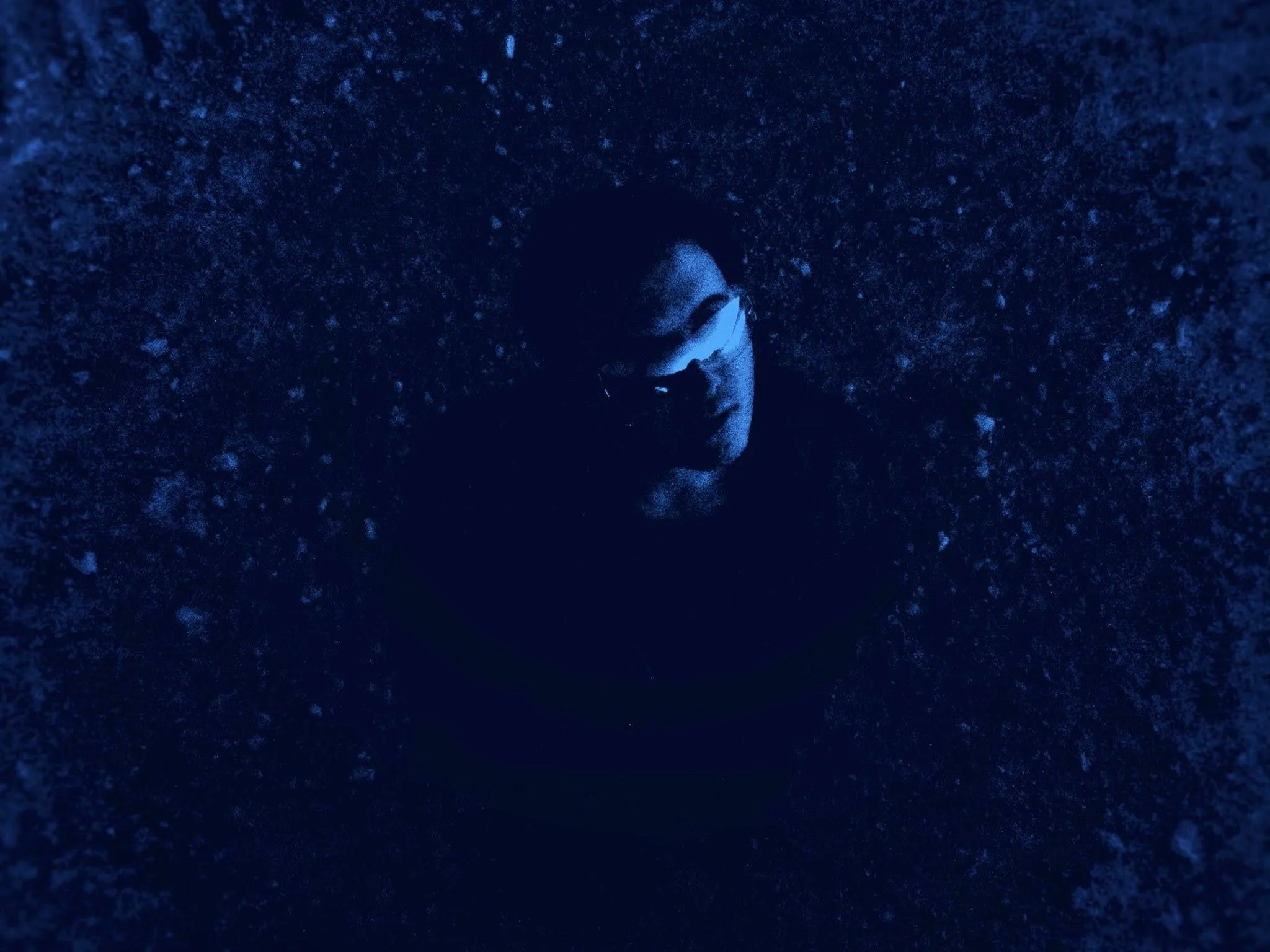
Photo by Kali Hendricks & Joey Miceli
Joey Miceli and JHype are no strangers to a new release, though Tempest signifies the first full-length project the pair has released in partnership with one another. Released June 26, this twenty-minute EP is full of ferocious energy, brain-breaking drums, and thematics that will call you to question the clouds.
Having been making music for practically their whole lives, in Tempest, the two join forces to make music that is technically challenging as well as a true showcase of their individual talents, many as there are. JHype brings a hyper-sharp focus to the rhythmic elements and master layering in the production that only a world-class beatboxer could fathom. Meanwhile, Miceli taps into the deepest parts of his inner world to fine-tune the musical environment perfectly to how he’s feeling in any situation.
Miceli and JHype each have several projects out independently and have cited collaboration projects in the past, yet Tempest is their most enticing of all. It is an effortless combination of elements of hyperpop with the introspective storytelling integral to indie alternative music. It is the kind of music you could easily cry to if you weren’t so busy dancing.
Life on Jupiter had the pleasure to sit down with the duo in the studio, inquiring about the life of the project, their collaborative producing efforts, the many skills they hone, and life beyond Tempest.
✮ ⋆ ˚。𖦹 ⋆。°✩✮ ⋆ ˚。𖦹 ⋆。°✩✮ ⋆ ˚。𖦹 ⋆。°✩
LIFE ON JUPITER: Were there any initial sparks of inspiration or shared musical interests that you guys discussed beforehand as inspiration for Tempest?
JOEY MICELI: I was interested in a way to make a return to form for myself. This kind of music was what I started out trying to make when I was younger. It feels like a more mature, more evolved version of what I was doing back then. Not that it’s sonically the same as then, but in the same world, is how I would describe it. I have been trying to work toward the idea of looking back with more fondness than regret for the music I used to make.
JHYPE: I think a lot of that speaks to you having really cool ideas back then; you were just lacking the skills to execute them.
MICELI: Definitely, our taste has evolved a lot too; we listen to more music that expands our language and our musicality, so that helps. Jay really pushes me to not think of references; we question instead, ‘What would Joey do?’ and this whole EP was purely that kind of thinking: ‘What would JHype and Joey do?’
I will say, though, if there was one artist that I was inspired by for vocal production purposes, it would be Imogen Heap. I love her soundscapes and the way she uses her voice as certain textures, which definitely led to inspiration for me.
JHYPE: She is dope. It’s hard to put a specific voice or sound to it, but I would also say we were excited by Lady Gaga’s MAYHEM, that really dancey, high-energy kind of vibe. Justin Bieber’s SWAG, too, in his vocal production for me. We’re doing all this on the fly, but there’s a lot of stuff vocally on that project that influenced me.
Thinking specifically about past projects, Pretenders, 26 and Portraits- on those albums you’re telling some deeply personal stories and I’m curious if the source of inspiration for the stories being told on Tempest are similar or different?
MICELI: They feel different for me only because, specifically on Pretenders, I made that album without the cover. All my past projects, I’ve had the cover at the beginning or in the middle of the process of writing, so I have that visual in my head to help guide me to the destination sonically. With Pretenders, the cover was the final piece to the puzzle, and it really was about being as present as possible in looking back on things I had figured out about certain moments of living in New York and coming home and what those things felt like and meant to me. With Tempest, though, it was back to basics for me. The cover photo was an accident, and it kind of reminded me of when I made Serendipity because it was the same way - the project came from a place of cherishing silver linings, cherishing moments with people and things that I loved and that pink sky visual was really what I felt represented the emotional world. So randomly seeing the sky one day, it was more blue than usual, and my life at the time was feeling quite that way. I whipped out my shitty camera and took a picture of the sky and it became sort of source material for the rest of the project. I thought to myself, I wanted to make something that feels like this picture, grainy, dark. The top end of the photo is just black and sort of fades into this sky, where you almost don’t know what it is but you know it’s a sky. Visual world building is a huge source of inspiration for me.
Jay, you have many hats - a producer hat, a rapper hat, an artist hat, a beatboxer hat. Is there a specific difference in your mood when it comes to creating? Whether it’s for JHype or producing in a partnership, like with this project, or is it more accidental?
JHYPE: I’m a vibe-catcher. Whenever we sit down and whoever starts with an idea, we just keep it going, and if it works, it works, and if it doesn’t, we move on. The throughline with all my music is that my personality shows in whatever I’m making. It’s going to be loud, it’s full, it’s all over the place, it’s going one-hundred million miles an hour in two minutes, there’s a lot going on.
In terms of production, if I’m producing my own songs versus songs for someone else, you know those are my drums and you can tell. Which is a huge goal of mine and something I strive for, that to be an identifiable feature of something I made. Because those drums come from a beatboxer. Decisions I make when I beatbox versus when I produce come from a similar place. I think they all work hand in hand; these hats are not as separate as they look. Short answer - ADHD.
Please speak more to the process of making Tempest.
JHYPE: It really is very clear-cut how it happened. We get together on Mondays and Thursdays and we have the two vibes we are working with at this point in time: a dance vibe and this other vibe that we may hear more about in the future. We know this is where we thrive, where we feel comfortable creating and building from. On these session days, we sort out what vibe we’re feeling and we would just make stuff, throw paint at the wall and see what sticks.
MICELI: We would just try things. What was so cool was we had really great luck with throwing things at the wall and it sticking. It doesn’t always work, but historically between the two of us and Colby C. and Santino Cardinale included, we are really good at making stuff that works for each other. We know each other so well and we know what we like, and we know how to push one another toward stuff that we want to hear sonically. I’m pretty sure I mentioned the concept to Jay at some point and the first song we wrote was “Alone together.” That was an accident, and the last was “Headroom.”
JHYPE: It’s funny the last one ended up as the intro. It took us a couple tries; we had been searching for the intro. Joey said we needed to make something that feels like an introduction. I made a couple things that I sent to him that weren’t really hitting and Joey threw together the crazy synth stuff that landed in “Headroom” and passed it over to me to add the drums.
How have you managed to create such a succinct project where all the songs feel they belong so effortlessly together?
MICELI: Most of the lyrics were written right in this studio, in the process of creation. “Acro,” for example, was written while Jay was building the beat, and I went in the day after and added more melodic production to “Acro,” same with “Urge.” We put all the ideas together and cut vocals, and it all sort of clicked into place.
JHYPE: The thing that isn’t an accident, the songs working together, the way it all feels within the same world - and I say this with zero ego involved - the way that Joey and I work, we work really well together. Our visuals are the same, our sensibilities are the same, what we hear is the same. We got into that space where we were super locked in on that sound and loved on that sound. In a way, we loved what loved us. This project would not have worked so well if we did not work so well. We’re together and we’re in the studio every day, and that’s what’s attached; the songs happen as a symptom of that.
Joey, do you enjoy your newfound taste for producing more for just yourself or do you see venturing out to produce for others in your future?
MICELI: I have already kind of ventured out to produce for other people, and I’m enjoying it so far, though sometimes I doubt my abilities and that makes me feel set back at times. Experiences like Tempest and the few songs on Pretenders that I got to produce help me quietly gain more confidence in order to spearhead doing it more for myself. I am an artist that thrives on collaboration and I think sometimes my creative life needs another mind to bounce ideas off - I need a wall to throw the ball at.
That is something that got me through this project. Lyrically, it is quite sad, a lot of talk about internal torture and digging yourself out of this hole. I needed Jay’s excitement to help me feel there was a light at the end of the tunnel. Had I been alone making this project, it likely would have sounded a lot different.
Back when I shot the cover last June, I had been making a project titled Tempest intended to be a fully solo project. I cut a couple of songs for that but I didn’t feel it was exciting enough. I was going for minimalism, which is why it’s funny the project ended up being so maximalist. I think that is exactly what I needed to do. Instead of letting sadness take a minimalistic route, the massiveness and loudness of the sound amplify the sadness, which is kind of cooler. It ended up making it feel more of an exorcism, and I feel a lot better because of it.
Where does that exorcism lie? When is the point where you feel better, as you say?
MICELI: I’ve said this before, I think the whole point of me making music throughout my life has been to feel catharsis. In my music is maybe one of the only places I actually feel powerful because it’s like writing something in stone. At least that’s how it feels. It’s like a declaration of emotion for me, which in itself is really special. Especially as a boy in music. There are so many women in music brave enough to bear their emotions to earn respect in this industry. I always want to meet them at that same point; we’re all human and can find common ground in emotion.
Jay, do you think you feel a similar catharsis for things you’ve gone through that you rap about in previous projects?
JHYPE: No, totally not. The stuff I have in the files collecting dust is depressing AF. I feel like a lot of that stuff is getting it off my chest, and sometimes that’s enough, just getting it off. That is my journaling. I just love making stuff.
Do you have hopes for how the EP sits with people?
MICELI: I’m not sure I can really predict that. I was a little hesitant to release it in the summer, because lyrically, visually with the cover, the project doesn’t really scream sunny, summer vibes. Though I feel the sonic excitement that the music gives me and others I love when they listen to it made me reframe that idea for me. I am glad we released it when we did, and I want people to have fun with it but also to examine themselves with it. It’s for quiet moments and public moments alike. Though you never really can predict how things will be perceived is what I’ve learned.
JHYPE: I want people to perceive it as a 20-minute roller coaster that ends at the very last second of “Goodbye theory.”
MICELI: Totally, the way I have thought about it is, as soon as “Headroom” starts, you’ve put your foot on the gas pedal; up until the last second of “Goodbye theory” you are going a million miles an hour.
What is the most striking part of the EP for you?
JHYPE: “Goodbye theory” is the outro of all outros; I am so excited that we made that. I cannot believe we made that; I cannot believe that happened in Las Vegas. The drums are super exciting for me. Making those drums was very stimulating to me. I’m very into the bounce and the pockets of everything. Everything is filled out, but nothing is too much; it’s not overlapping.
MICELI: I can’t name a specific moment. The way the EP begins is really cool. The first five seconds really feel like you’re dropping into that sky. It felt like a magic moment when that happened. Though, I think a really landmark moment for the project was “Alone together,” because that gave me a compass. It was the only song made apart from all the others, and it was the first song Jay and I had made together since “Worry.”
“Alone together” was just a demo; we were sitting in my studio, Jay was making that beat and the song flooded out. It's been sitting in a folder for a year, never finished. I pulled it out, added a bridge, and Jay did his magic on the drums to give it some charge on the bridge. Then Tino, in the mixing and mastering, added a little variation to the ending and it was like a cherry on top of the song. It was a really important beginning for what would be. Plus, I think it was only a taste of what we would unlock, because once you get to “Goodbye theory,” it’s build, build, build, build, build.
JHYPE: Yeah, and “Goodbye theory,” had a completely different ending. It just wasn’t good. I listened to it for like two days and I thought this could be better. I felt like I would be giving up on the song if I didn’t open it back up. I got up one morning, decided I was done hearing it like that, and did not give up on it, and I’m so glad we didn’t. One of my proudest moments.
In “Acro,” you say, ‘how unlucky is a man with open fists.’ What does this lyric mean to you and its significance in the context of the song?
MICELI: “Acro” is musings on masculinity to me. It is about vulnerability as a man. In the second verse, ‘At least I kiss the brick before I hit you in the head,’ becomes ‘how unlucky is a man with open fists, if the truth hurts why am I being so honest?’ I wanted to convey what it can feel like when I’m personally feeling vulnerable, but I see so many other men pretending that nothing is wrong, hardening before me. I’ve talked more about ‘hardening’ in Pretenders.
I find Tempest conceptually is about softening. Letting a guard down that I’ve put up after so many years because I’m so afraid of loss and abandonment. “Acro” is a moment for me to let the wall down a little bit and admit, ‘how unlucky am I standing here, open fists, I can’t be mad at you, I can’t play the tough guy,’ which is what that line was going for. Lyrically, one of my favorite songs.
Was there a specific experience that brought you to write “Urge?”
MICELI: It wasn’t necessarily about a specific moment; I was catching myself in a very toxic pattern with people in general, where I was feeling that if I got any inkling that someone is bothered by me, I would push them so far away. It’s like an urge I get to protect myself. I liked that word to describe the feeling; it was the best way I could describe it. As if someone’s tapping you on the shoulder. If “Acro” is about not being able to put up the wall, “Urge” is about only being able to put up the wall. There’s a lyric in there that encapsulates the whole song for me: ‘my mind has become never-ending glimpses of avoidance.’ My mind has become this thing I can’t even get past. There’s a trap with writing a song like that, not to make it too specific to where it’s not relatable. “Urge” is definitely one of the more relatable songs on the EP.
Do you have any vital sources of inspiration for music making that have nothing to do with actually making music?
JHYPE: Places inspire me. Environments are a big source for me. Anticipating or envisioning how something sounds in different kinds of environments inspires me directly. On the golf course, in the car, in the clubs, where would this play, how would this live? If I envision the life of a song in one particular place, I’m making different choices for sounds stylistically to get me to that goal.
MICELI: I’ve had the honor of people calling my music cinematic, which is a big place of inspiration. I want moments in my music; I want to soundtrack people’s lives, because that is what my favorite artists have done for me. Life in general, as a living thing but also as a theme, has become a source of inspiration for me.
I have used the sky so much as a mural for my music because it really has been so serendipitous that way where I look up, and I feel a certain way, and the sky is reflecting it back to me. That’s the best way I can explain it. It is the second time I’ve put it in the music and made it the aesthetic. Again, that idea of being tapped on the shoulder.
I get my lyrics from really just listening to people talk. Sometimes people say really cool stuff. Some song titles, like “Goodbye theory,” come from hearing the words together in the same sentence. Finding cool ways to put words together and make meaning of them.
How do you escape creative ruts?
JHYPE: I’m a big believer in making stuff you’re not happy or thrilled about. I think it’s important to fully make that stuff; making bad songs is crucial. Make the bad thing, keep the muscle flexed; there might be a good line in there, whether the verse is really strong, a melody, or there’s a hook you can use for something else. Never stop making stuff.
MICELI: I had to go through that with Pretenders, and I had to go through that experience to get to where I’m at now. I had to learn the hard way to shut my brain up and let myself just have the idea, instead of judging the idea before it’s ever even tried. Trying to reconnect to my childlike writing where I would just sit in a room alone and write whatever I wanted and record it and then put it out literally the next day on SoundCloud. That came from me loving my first instinct. Making Tempest felt reminiscent of that. I went with my instincts, and it worked. I’m so proud of it for that reason too, because it’s a very us project. Jay, too, as soon as he started building anything, with drums especially, it was just there. You have to work through it and remind yourself to just chill out and enjoy it again. Cherish it.
How does your newest single, “Hover,” fit into the world of Tempest for you? I’m curious more specifically about where the choice comes from to release it so shortly after the project has breathed a little, as opposed to further in the future as a precursor to another potential project?
MICELI: We wrote “Hover” while we were making the rest, and I felt like it wouldn’t belong anywhere else. Instead of making the project longer, I felt it was a cooler idea to offer it as an extension of the world. A lot of Tempest is spent with high energy and fast pacing, so “Hover” kind of feels like this reflective moment, which I appreciate.
What is next for either one of you? Any hopes for another collaboration project?
[They looked at each other very intensely when asked about future projects]