Q&A: Cuntrol on the Importance of DIY, Community and Their New Single “Lurking”
WRITTEN BY KIMBERLY MURO
✮ ⋆ ˚。𖦹 ⋆。°✩
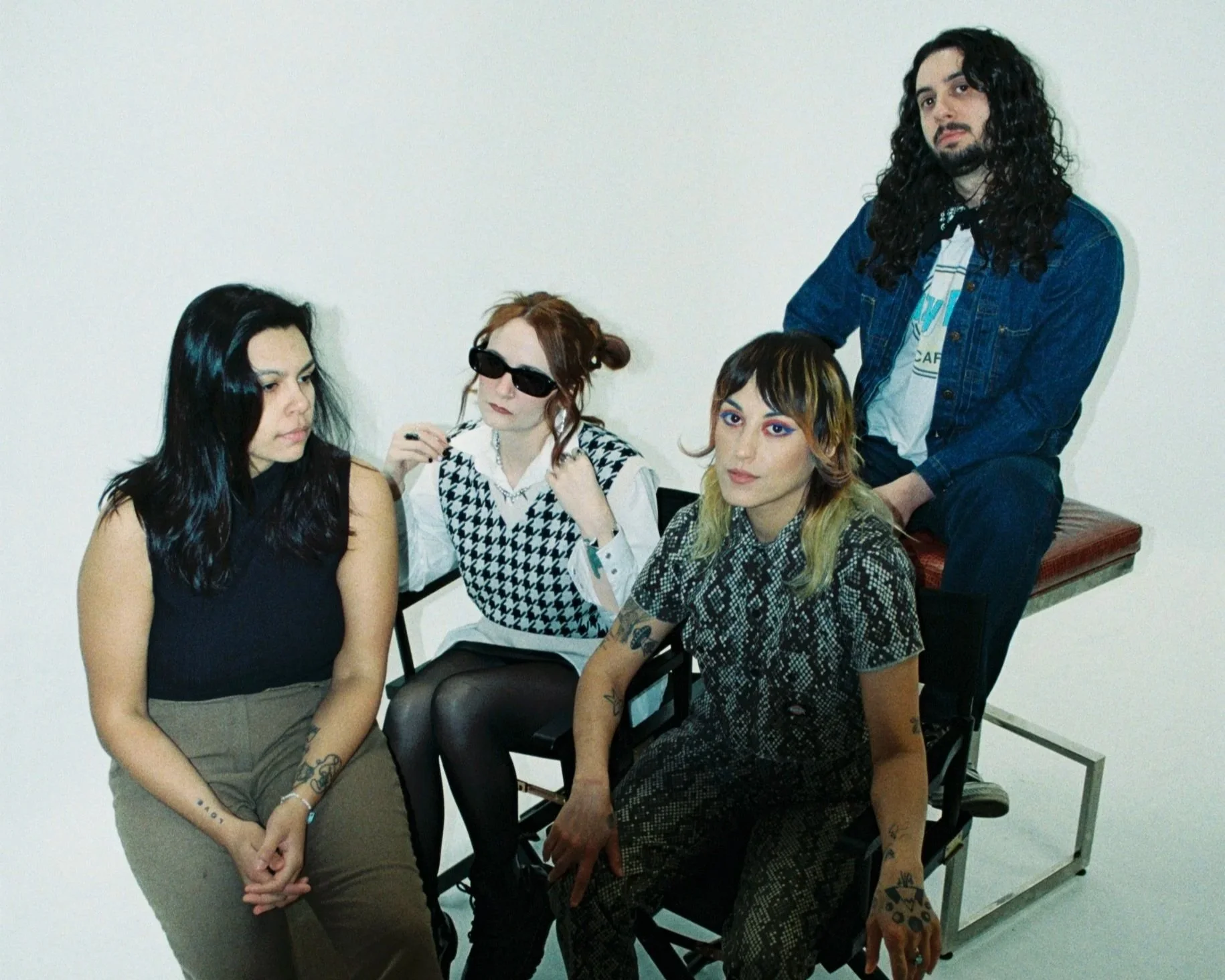
Cuntrol is an LA-based indie punk band made up of Anissa Rodriguez, Daniel Shapiro, and Gigi Zimmer. All from different corners of the music industry, they’ve come together to create a project rooted in truth, community, and passion.
While their music can range from soft ballads to explosive punk anthems, their drive cuts through every track. The members' long-time connections to the music industry, whether it be making music or working as a tour guide for other artists, allow them to navigate Cuntrol with a fresh perspective.
Cuntrol values artistic integrity and connecting with people through music. They are fully engaged with every aspect of the band’s existence. From writing to producing and filming music videos, Cuntrol understands that this hands-on DIY approach is everything. The band makes music that allows them to process their own lives, and the fans who find a sense of relatability with them are a plus.
As they continue to work on their forthcoming debut album, they spoke with Life On Jupiter Magazine about their work thus far and what is to come. Read our full discussion below.
✮ ⋆ ˚。𖦹 ⋆。°✩✮ ⋆ ˚。𖦹 ⋆。°✩✮ ⋆ ˚。𖦹 ⋆。°✩
LIFE ON JUPITER: You spoke with The Luna Collective about how the band came together because of your shared musical tastes, artistic vision, and life perspectives. How important do you think these are in making music collaboratively? Especially when making music that prides itself so much on sincerity and truth.
ANISSA RODRIGUEZ: I think it's really important. Daniel and I have been working in the music industry for a long time, so we can relate a lot to what that entails. We grew up listening to the same music, so we have the same vision for how we want to make music and what we want to do with music. We were both bass players in our previous bands; they used to play together.
Do you ever feel any pressure from this “mission statement,” so to speak, to be sincere? Any worries that your work may not always completely encompass your character as you grow?
RODRIGUEZ: I feel like we kind of stay in the moment and think about what we are going through. It happens naturally. We just do what feels right with music; that's how I feel. I’m not really thinking about what anyone else is going to say or feel. We go through things and talk about it, but we stay in the moment.
DANIEL SHAPIRO: I think the question would have been answered differently when we were younger in our other bands. With all this experience we’ve had, you definitely have a different outlook. Once you’ve done this a few times, you start to realize that a lot of this pressure you build on your own, and it actually hinders the childlike creativity you had when you were starting a band in a garage with your friends. Without thinking about rules or theories to follow, you just did it, and it felt right. It would make you respond to your music a certain way. The music industry can be very high pressure, and it just takes out the fun and artistic integrity of things. Speaking of what Anissa said, we have been friends for a long time, and we use our songwriting sessions as cathartic therapeutic outlets to make songs. We talk about what's happening in our lives and use that as fuel for the engine of the song. As the band has started to release more, we’ve realized that if people give a fuck about it, that's just a bonus.
Have you guys always been in bands, or have you taken any solo endeavors in your music career?
RODRIGUEZ: For me, I started a band with my sister in high school; I was 15. We started a band that was kind of like a screamo, metalcore, emo kind of thing. I did that for a long time; I’m still in the band today, but I stepped away for a bit and did my solo thing because I felt like I needed to do something different. When I left my band and started doing that, that's when I reconnected with Daniel again because he had something similar with leaving his band, and we started playing together.
SHAPIRO: We’ve definitely played music the majority of our lives. We’ve been in bands that have also been touring for a long time. It’s different being in this band because we want to tour and play more shows, but we have other things going on. We’ve done a few things as a band before Cuntrol. We had another punk psychedelic thing before this; it toured across the states twice right before COVID. The day that we ended our tour, COVID started. That spawned a lot of the songs that came out as this band; we worked on or wrote them as potential songs for our old band.
What is so special about being in a band?
RODRIGUEZ: I think I do better when I am collaborating with somebody that I trust and know. Doing the solo thing was fun, but I like being around other people who play music. Having a community, making music with your friends- it’s just better.
SHAPIRO: I agree. Even when I'm writing music by myself, I’m trying to show music to my wife who will be in the other room and has probably heard it like a million times. It's hard for me personally to get excited about writing when it's just me. Even having someone in the room who is a listener or a friend is always helpful for me.
What is special about a Cuntrol live show?
RODRIGUEZ: Having fun on stage with your bandmates is a big part of it. At shows, we’re all there for the music, so it’s really cool to see that you can bring people together. Having fun with everyone and the energy is what it's all about: connecting with people and community.
SHAPIRO: I think there needs to be more live music in this capacity. I work with other artists, and I do other shows with different styles of music, and I see the importance of all kinds of genres, but Cuntrol’s genre resonates with me more personally. The genre isn't really defined because our music jumps around a little bit; it does have those things from a hardcore or shoegaze show from a more underground subgenre. There is a connectedness as a culture and society in giving something a place to escape from the normal parts of life, having people get off their phones for a change.
What do you guys find the most valuable or special thing about the underground music spaces? How do you guys try to keep in touch with these roots?
RODRIGUEZ: I think people forget about how music brings people together; the whole reason we go to shows is not only to hear the music but to be around people who feel the same way. They want to feel connected to something, and that's what's so cool about underground music: connecting with people and community.
SHAPIRO: We honor the scene by doing everything. The nature of DIY is to do it yourself, right? The band is at my house; we’re picking up instruments. We’re not hitting up a producer; we’re not hitting up Sunoto to make a song. We’re just genuinely in the room making music together, and it just so happens some people might listen. Bringing it to a DIY space brings back that same energy. Doing everything ourselves is probably cheaper, and a normal person doesn’t have to spend all their money to see us. DIY culture isn't meant to feel cheap, but it's supposed to be understood that this is people coming together to create the energy. It’s funny because you could spend $100 on a festival, but if you go to shows at a rec hall, or back in the day, a church or basement or something, those shows can still feel the same way. That’s why DIY is so important.
Are there any positive outcomes you guys think have come from the modern music space? Things like accessibility, social media outreach, and platforming, etc.
RODRIGUEZ: Probably for both of us, we were around when MySpace opened the door for a lot of underground music because it was reaching people it couldn’t before. Now your music can reach a new audience; I think that's the good thing. You don’t have to tour to get your name out there; you can use the internet to promote yourself. I've seen a lot of positive things come out of social media and the internet with underground music.
SHAPIRO: Just like any tool, you can use it for really good and really bad. To harp on the good stuff, it’s super good because you don't have to have a huge publicist or artist relations handling your identity as a band. You can kind of control how you want to be perceived; there's not as much mystique maybe with artists anymore because you have to be so transparent in front of a camera, but that could be cool. I love seeing artists talk about how they handle their daily life; on top of that, it fulfills that same DIY itch where now you can upload and do everything yourself. It can be affordable or even free.
RODRIGUEZ: We’ve booked tours because of Instagram and other social media platforms. Going back to DIY, that's a huge thing that social media has helped with. Connecting with venues and bands from other cities, it's a great tool for sure.
Tell us a little about your newest single “Lurking.”
RODRIGUEZ: The song is definitely what we’ve been talking about with finding community through music. It’s an anthem to the people who feel alone and unseen, to know that there are people out there feeling the same way, and if we come together, we can rise above.
The music video for the song is great. How do you go about taking a song and transforming it into a more physical piece of work?
SHAPIRO: This one has got the punk and raw energy instrumentally. We wanted to keep it raw like the instrumental of it entailed, to just show a band playing music, rocking out. There are little scenes here and there, clips of Anissa’s eyes looking around for some artistic visuals and aesthetics. We wanted to clip this music video as a social media tool to show people that we perform these songs a certain way that they would expect to see them live.
What role does “Lurking” play in the next chapter of Cuntrol?
SHAPIRO: This lends itself to what Anissa was saying about the duality of the band. We have these explosive punk-adjacent aggressive songs, then we have these ballad, indie, supple songs that are very much 90s-adjacent. It all agglomerates into what Cuntrol is. Not to spoil too much, but we’re gonna put all of this into an album, and you’ll be able to experience the dynamics of the band.