CREATOR SPOTLIGHT: INKiD Talks Producing for Zara Larsson, MARiMARi, and More
WRITTEN BY ANTHONY RATCHKOV
✮ ⋆ ˚。𖦹 ⋆。°✩
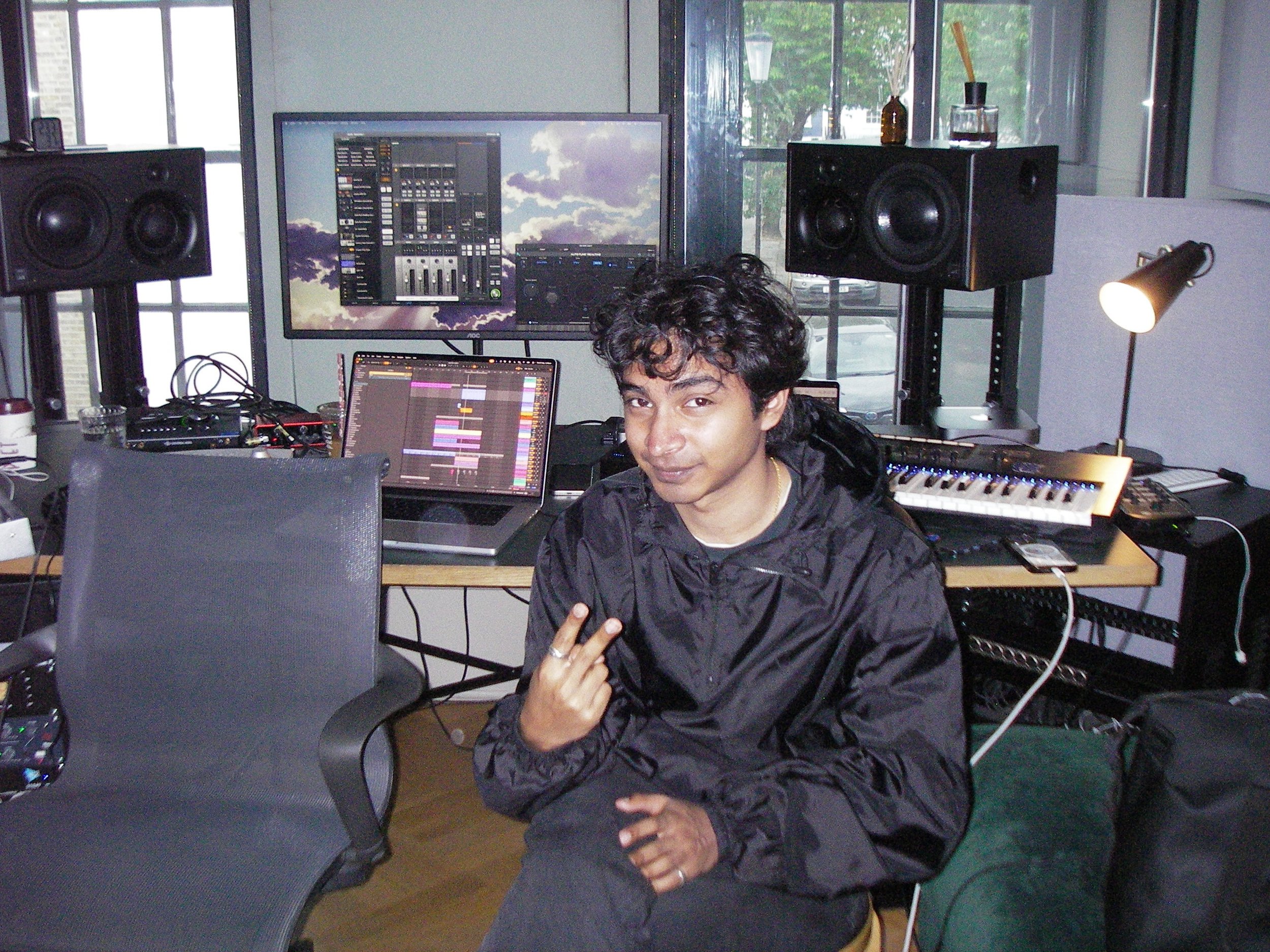
INKiD is the producer name of Akul Kakitapalli, who is based in Liverpool, UK. He has a collection of stories of why his alias is based on squid ink (he tells those stories here), but this element not only represents his name, but his process.
Ink seeps into anything it touches. When it does, you still see it there but it reshapes what it comes in contact with into something fresh. If you were to write with ink on a paper, the liquid takes shape to tell a new story. If you even combine squid ink with pasta, you have squid ink pasta, a dish you can pair with some completely different ingredients. When INKiD is producing for rising or current popstars, he’s adding in his work to make something distinct and exciting.
He’s produced for multiple different genres, but all of them are sounds of the future, ones he’s left his mark on. Whether it's making jazz-pop grooves for Jessica Doolan or synthesizing gritty basslines for Zara Larsson, he can do it all. This range reflects the theme of INKiD’s producer name once more; he’s less focused on stamping his own signature sound on a tune than he is seeping into the inspiration already present until it’s impossible to imagine the song without him.
Life on Jupiter had the opportunity to track the ink back to its source, and explore further the different areas his many helping hands have attached themselves to. Read our full discussion below.
✮ ⋆ ˚。𖦹 ⋆。°✩✮ ⋆ ˚。𖦹 ⋆。°✩✮ ⋆ ˚。𖦹 ⋆。°✩
LIFE ON JUPITER: Your most recent production is on Sophia Saudi’s “tongue.” How does your work on that song expand the world she is building?
AKUL KAKITAPALLI: She’s incredible. I’ve known her for a year and a half now. I was part of her first sessions when she came to London, and she was doing PinkPantheress-esque stuff. With her world, she actually went to school for cinematography, so she has her own world of visuals. I don’t see many artists that early on having that, and I see it and just try to make music for that.
You’ve worked with people that are very early in their discography, how do you witness artists recognizing their sound?
KAKITAPALLI: There are so many artists nowadays, it’s so accessible which I think is a great thing. There are people who genuinely express themselves through music as if they have things to say. They have a voice and they want to connect with people. Artistry is very important, it's what separates artists who have stayed around for so long from the rest. Lady Gaga has been around for decades because she’s kept doing new things and she’s had new things to say throughout her life. That gets me to be like, “Oh, I really want to work with you because you have that sort of vision. I can see this in 10 years.” You’ll live more life and you will write about it; you will express yourself through it.
If you had to write an instruction manual on how to get comfortable working with artists you’re collaborating with for the first time, what would be step one, and where do you go from there?
KAKITAPALLI: I do actually have a method. I’d light incense in my space right before they come, and then we’ll have a small talk about where you’re coming from and all that kind of stuff. When we start working, it’s, “What do you listen to?” and “What do you like to make?” I think those are two very different questions, because people grew up listening to all sorts of stuff. I want to get to know people's taste and see how that fits into what they want to make, and then it kind of just rolls from there. Usually it starts off with those main questions because to resonate with someone you need to know their taste. The music you listened to when you were 15 years old is still going to influence you even if you’re making completely different music now.
Some producers like to work in very comfortable places while others like to work in spots that aren’t that cozy. Where would you say you are on that spectrum?
KAKITAPALLI: To be honest, I haven’t had a set space for a long time because I’ve just been moving from place to place. I have this one synthesizer called the UDO Super 6. It’s essentially like a big keyboard and if I could lug that around everywhere, I would. That’s my comfort piece of gear right now, but if I don’t have it, I’m not kicking rocks; I’m not putting up a fight. To be honest, I think it’s good to be portable.
You worked in multiple different styles and multiple different sounds, but a universal element between all of them is they feature some sort of percussion. If you could make a Mount Rushmore of producers you look up to specifically for their drums, who would they be?
KAKITAPALLI: There’s a producer called Frank Dukes. He’s worked on a bunch of Post Malone stuff and a bunch of Lorde stuff, honestly just everywhere. Throughout his career, his chords and everything are crazy, but his drums- he did this one record off the Kid LAROI deluxe album recently, and it was very trip-hoppy and super heavy. He just has a way with how things can be so heavy but so light at the same time; he treads on that line of minimalism incredibly. I also think Pharrell Williams- he’s been across so much pop stuff that’s incredible, and SOPHIE. She has done so much, for just exploding music but also drums specifically.
You’re credited for production on Zara Larsson’s “Girl’s Girl” and also on the Girl’s Trip remix. The whole Girl’s Trip album features a much more gritty, distorted, synth sound. Was that collective knowledge between the producers on all the tracks that you all would work with those kinds of sounds?
KAKITAPALLI: Honestly, it was really interesting. Being part of the original “Girl’s Girl,” I helped finish the record and it was cool to put my sounds on it. With the remix, they’re two almost completely different songs. They kept one synth line, which became the main part of the remix. It was a bit I had added, and it was too crazy for the original. MNEK, who pulled me into the project and who I’m signed with, moved it across and they did the track to that. I then got sent the track and kind of just finished it up from there. It was so cool to see how you can just make a song from one synth line.
You’ve been around more iconic names like MNEK and even Lewis Capaldi; have you received any Dumbledore-like wisdom from them which really impacted your production process?
KAKITAPALLI: A lot of people have told me that less is more. If you want something to sound big, you don’t add more stuff. You make the stuff that you already have sound phenomenal, and you work from there. Also, vocals are king. Song is king. If you don’t have a banging song, nobody cares how hard your 808 is. Nobody cares how hard your kick drum is. Nobody gives a damn about your snare. Strive for good songs, and then everything else will follow.
Does having a smaller credit for a big name artist or a bigger role for a smaller artist feel like a bigger achievement for you?
KAKITAPALLI: Both have their things. More specific to Zara, the first ever music video I watched was “Never Forget You” by her. That was a big thing of like, “Oh my God, now we’re a part of this.” I also think growing something from scratch is so important and seeing that journey throughout the years is so rewarding in the sense that someone is willing to trust you with their sound and they’re willing to put that out and share that with people. People being able to trust you that early on is such a rewarding experience.
What’s the story of basing your producer name off of squid ink?
KAKITAPALLI: I started off as an artist. I was experimenting with the clothes I was wearing, I started wearing all black since my second year of college. Basically my whole wardrobe is black, so that was one part of it. I was also making a lot of electronic music for myself from scratch at the time, so it was when the pen hit the paper kind of thing, and all the synths were smearing. I also just really like squid to be honest. It’s been an ongoing joke, even one time for my birthday my friends bought me this 3D printed squid. The name has meant more to me over time.
Where would you like to take your production next?
KAKITAPALLI: Right now my goal is to develop artists from scratch, there’s a few out there, but also my own music as well. I started off as an artist, and then I completely went to producing for other people, but I’m starting to get back into my artistry. It’s also to show people what I like to do, because all the music I’ve made for people doesn’t fully represent my taste to a tee. It would be cool to share what I enjoy in writing, producing, and singing. That’s definitely at the top of my list but also developing artists from scratch, that’s where my head is at the moment.